 How-to
What to Do If a Temporary Crown Falls Out on the Weekend
Last Updated: November 8, 2026
Quick Summary
Find the temporary crown, rinse it gently with cool water, protect the exposed tooth, and call your dentist. Many temporary crown losses can wait until the next business day, but swelling, fever, severe pain, or trouble breathing or swallowing means you should seek same-day care.
- Pick up the crown by its outer edges and rinse it with cool water without scrubbing.
- Slide the crown back on only if it seats easily and evenly with no rocking.
- Skip superglue, household adhesives, and toothpaste, which can bond the crown permanently.
- Stick to soft foods and chew on the opposite side while the crown is off.
- Call 911 or go to an emergency department for trouble breathing or swallowing.
Table of Contents
- First Steps When Your Temporary Crown Falls Out
- Temporary Crown Fell Off and Dentist Is Closed: Your Weekend Plan
- Can I Put a Temporary Crown Back On? When It's Safe and When It Isn't
- How Long Can You Go Without a Temporary Crown?
- What to Eat When a Temporary Crown Falls Off
- Red-Flag Symptoms That Mean You Shouldn't Wait Until Monday
- Special Situations: Swallowed, Broken, or Loose Crowns
- Requesting a Same-Week Appointment at Franklin Dental Center
- Frequently Asked Questions
First Steps When Your Temporary Crown Falls Out
A temporary crown falling out is rarely an emergency, but it does need quick, calm action.
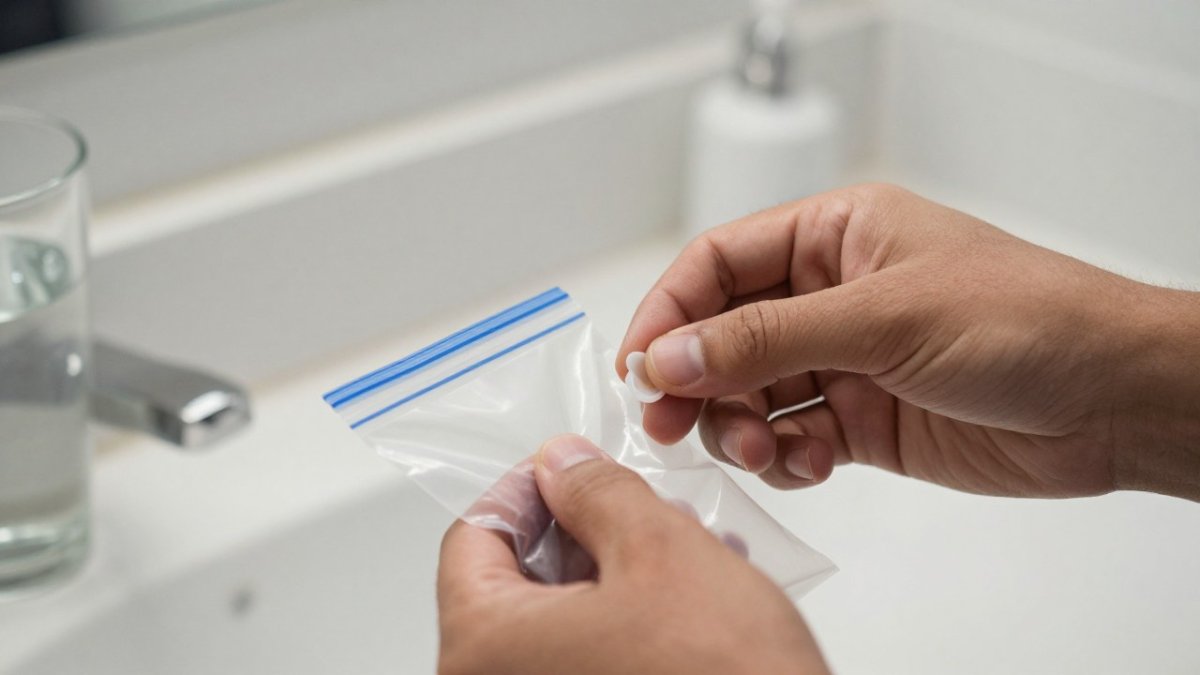
Here is the short answer: find the crown, rinse it gently, protect the exposed tooth, and call your dentist.
Start with these steps:
- Find the crown and pick it up by the edges, not the inside.
- Rinse it with cool water. Do not scrub it.
- Rinse your mouth with warm salt water.
The American Dental Association notes that a temporary crown protects the prepared tooth while the permanent crown is being made, so keeping the tooth covered matters (ADA on dental crowns).
Temporary Crown Fell Off and Dentist Is Closed: Your Weekend Plan
When a temporary crown fell off and the dentist is closed, your job splits into two parts: protect the tooth now, and line up care for Monday. Write down the time the crown came off. That detail helps your dentist plan the fix.
Your weekend plan, in order:
- Save the crown in a small container or zip-lock bag.
- Rinse your mouth with warm salt water.
- Call your dental office and leave a message, even after hours.
- Check the office website or voicemail for an emergency number.
- Keep the area clean and avoid hard or sticky foods.
If your dental office has an after-hours line, describe your symptoms clearly and ask whether you need urgent care.
Can I Put a Temporary Crown Back On? When It's Safe and When It Isn't
Reattaching a temporary crown is sometimes reasonable and sometimes the wrong move. The decision hinges on three things: whether the crown seats fully, whether the tooth underneath is intact, and whether the crown itself is damaged. Work through those checks before you put anything in your mouth.
Check the crown first
Pick up the crown by its outer edges and look inside. A temporary crown is usually made of acrylic or resin and is more fragile than the permanent crown that will replace it.
- Intact and clean: The crown is whole, the inside is free of old cement and food, and the edges are smooth. This is a candidate for temporary reseating.
- Cracked, chipped, or crushed: Leave it off. A damaged temporary crown will not seal the tooth and can break further while you chew.
- Missing: If you cannot find the crown, do not substitute anything for it. See the special-situations section below.
Check the tooth and the fit
Rinse your mouth with warm salt water and look at the prepared tooth in a mirror. Then try the crown on with light finger pressure only.
Safe to reseat temporarily:
- The crown slides on with light pressure and no rocking.
- The edges meet the gumline evenly, with no visible gap on one side.
- Your bite feels the same as it did before the crown came off.
Not safe to reseat:
- The crown will not seat fully or sits high when you bite down.
- It rocks, spins, or feels tight in a way it did not before.
- The tooth underneath is broken, cracked, or extremely sensitive.
Watch out: forcing a crown that will not seat can wedge it onto the gum, irritate the tissue, and change your bite, and a crown that sits high can make the tooth sore within hours.
Stepwise temporary-cement instructions
If the crown passes the checks above, you may consider a temporary dental cement from a pharmacy. Follow the package directions exactly, because products differ in mixing and setting time.
- Clean and dry the crown inside and out with a soft brush and cool water. Shake out excess water and dry the inside with a clean tissue.
- Dry the prepared tooth gently with a tissue or gauze. Avoid air-drying with anything other than a clean tissue.
- Mix or prepare the cement per the package directions. Use a small amount, roughly a pea-sized portion for a molar, less for a front tooth.
- Fill the crown about one-third to one-half full, coating the inside walls rather than overfilling.
- Seat the crown with firm finger pressure and bite down gently on a clean gauze pad or your finger for the time the package specifies.
- Wipe away excess cement from the gumline with a clean finger or gauze before it fully sets.
- Check your bite. If the crown feels high, remove it, clean it out, and try again, or leave it off and call your dentist.
Skip superglue, household adhesives, and toothpaste as a substitute. They can bond the crown permanently to the tooth, damage the enamel, and make the permanent crown harder to fit. If you cannot get temporary cement, leaving the crown off and protecting the tooth is safer than improvising.
When to leave the crown off on purpose
Sometimes the best weekend move is to leave the crown out. Leave it off if the tooth is very sensitive, if the crown is damaged, if it will not seat evenly, or if you are unsure about the fit.
If you are unsure whether the crown fits correctly, leave it out and call your dentist. Learning how to prepare for dental crown treatment can help you handle the days ahead with more confidence.
How Long Can You Go Without a Temporary Crown?
A temporary crown can usually stay off for a few days without lasting harm, but the exposed tooth gets sensitive fast. The prepared tooth is shaved-down enamel, and it has no protection once the crown is gone.
Without a temporary crown, the tooth can:
- Feel sharp pain with hot or cold drinks.
- Shift slightly, which can make the permanent crown fit poorly.
- Collect food and bacteria along the gumline.
A short gap is often manageable with careful eating and good cleaning, but a longer gap can lead to problems. If you want to judge how urgent your own situation is, read about how to tell if you need a dental crown.
What to Eat When a Temporary Crown Falls Off
Stick to soft foods and chew on the opposite side. The goal is to keep pressure and sticky debris away from the exposed tooth.
Good choices:
- Yogurt, applesauce, and mashed potatoes
- Scrambled eggs and soft pasta
- Smoothies and soup, served lukewarm
Foods to skip:
- Ice, hard candy, and nuts
- Chewing gum and taffy
- Crusty bread and chips
Avoid chewing on the affected side entirely. Even soft food can nudge a loose crown or press on a sensitive tooth.
Red-Flag Symptoms That Mean You Shouldn't Wait Until Monday
Most temporary crown losses are routine and can wait for the next business day. A smaller share cross into urgent territory. The skill is telling them apart quickly, then acting on the right path.
Routine versus urgent
Routine, call your dentist first thing Monday:
- The crown came off cleanly and the tooth is only mildly sensitive.
- The tooth is intact and there is no swelling.
- You can eat and drink comfortably on the other side.
Urgent, seek care the same day:
- Severe, throbbing pain that keeps you awake or does not ease with over-the-counter pain relievers.
- Swelling in your face, jaw, or gums.
- Fever alongside tooth pain.
Swelling and fever together can point to an infection that needs prompt professional care. Trouble breathing or swallowing is a medical emergency, call 911 or go to an emergency department rather than waiting for a dental callback.
Your weekend decision path
Work through these questions in order:
- Is there swelling, fever, trouble breathing or swallowing, or uncontrolled bleeding? If yes, seek emergency medical care now. Do not wait for a dental office to open.
- Is the pain severe and uncontrolled? If yes, call your dental office's after-hours line. If there is no line, call an urgent care clinic or an emergency dentist who advertises weekend hours.
- Is the tooth intact and the crown undamaged? If yes, you can usually reseat the crown temporarily (see the previous section) and call Monday.
- Is the crown damaged, missing, or ill-fitting? Leave it off, protect the tooth, and call Monday, or sooner if pain escalates.
How to reach care after hours
Many practices route after-hours calls to an on-call line. Check the office voicemail, the practice website, and any appointment reminder text for an emergency number.
If your regular office has no after-hours channel, urgent care clinics and emergency dentists that advertise weekend hours are reasonable options for swelling, fever, or severe pain. For routine crown loss without red flags, waiting until Monday is generally safe.
What not to do while you wait
- Do not ignore swelling that is spreading toward your eye or neck.
These are the same signals that tell you a restorative dental procedure may be needed sooner rather than later.
Use this quick comparison to decide whether your situation can wait for Monday or needs same-day care.
| Situation | Classification | Action |
|---|---|---|
| Crown off cleanly, mild sensitivity, tooth intact | Routine | Call dentist first thing Monday |
| No swelling, fever, pus, or bad taste | Routine | Call dentist first thing Monday |
| Severe throbbing pain not eased by pain relievers | Urgent | Seek care the same day |
| Swelling in face, jaw, or gums | Urgent | Seek care the same day |
| Fever alongside tooth pain | Urgent | Seek care the same day |
| Bleeding not stopping after 10 to 15 minutes | Urgent | Seek care the same day |
| Trouble breathing or swallowing | Emergency | Call 911 or go to emergency department |
Special Situations: Swallowed, Broken, or Loose Crowns
Swallowed crown: A temporary crown is small and smooth, and it usually passes through the digestive tract without trouble.
Broken crown: If the temporary crown cracked or chipped, it may not protect the tooth anymore.
Loose crown: A crown that moves but stays on is a warning sign.
Inhaled crown: If you think you breathed the crown in, seek medical care right away.
Requesting a Same-Week Appointment at Franklin Dental Center
Most temporary crown problems resolve with a quick visit, and getting on the schedule early matters.
We focus on comfort first. Dr. Donna Franklin-Pitts focuses on a gentle approach, and our team aims to make dental visits comfortable for patients.
We accept a variety of insurance plans, including Medicaid and CHIP for kids. You can book an emergency dental appointment online, or call our office and leave a message after hours. If you are ready to move forward with reliable restorative dentistry services, we will walk you through each step.
A lost temporary crown is stressful, but it is fixable. The key is protecting the tooth, avoiding the wrong foods, and calling for help before small problems grow.
Frequently Asked Questions
Is it common for temporary crowns to fall out?
Yes, temporary crowns come off fairly often. They are made of acrylic or resin and held in place with temporary cement that is designed to release easily so the crown can be removed at your next visit. Biting into sticky foods, grinding at night, or a crown that was already loose can all cause it to come off before your permanent crown is ready. It is not usually an emergency, but you should call your dentist to have it re-cemented.
What should I do if my temporary crown falls out and my dentist is closed?
Save the crown in a small container or zip-lock bag, rinse it gently with cool water, and rinse your mouth with warm salt water. Avoid chewing on that side and keep the exposed tooth clean. Call the dental office and leave a message, and check whether they have an after-hours line. If you cannot reach anyone, contact a dental professional for guidance on next steps.
What if I swallowed my temporary crown?
Swallowing a temporary crown is usually not dangerous because it is small and smooth, and it will typically pass through your digestive system. Do not try to make yourself vomit. Call your dentist to let them know and to schedule a replacement or re-cementation. If you have trouble breathing, chest pain, or severe abdominal pain, seek urgent medical care right away.
Can I still eat if my temporary crown fell off?
Yes, but choose soft foods and chew on the opposite side. Stick to options like yogurt, scrambled eggs, mashed potatoes, soup, and soft pasta. Avoid sticky foods like candy and gum, hard foods like nuts and ice, and very hot or cold drinks if the tooth is sensitive. Keeping food away from the exposed prepared tooth helps protect it until your dentist can re-cement the temporary crown.