 How-to
How to Remove Coffee Stains From Teeth Without Damaging Enamel
Quick Summary
The safest way to remove coffee stains is to rinse with water after each cup, wait about 30 minutes before brushing, and use a gentle fluoride whitening toothpaste with a soft brush. For how to remove coffee stains from teeth without damaging enamel, avoid high-abrasive pastes and undiluted peroxide, and see a dentist if the stain persists or looks deep.
- Rinse your mouth with plain water right after each cup of coffee.
- Wait about 30 minutes before brushing, since coffee's acid softens enamel.
- Choose whitening toothpaste with the ADA Seal and avoid gritty, high-abrasive pastes.
- Stop whitening strips if you get sharp sensitivity, gum burning or white gum patches.
- If two weeks of home treatment does not change the color, book a dental exam.
Table of Contents
- Why Coffee Stains Teeth and What Kind of Stain You Have
- Step 1: Rinse With Water and Time Your Brushing Correctly
- Step 2: Choose the Best Product to Remove Coffee Stains From Teeth
- Step 3: Does Baking Soda Remove Coffee Stains From Teeth Safely?
- Step 4: How to Remove Coffee Stains From Teeth Quickly at Home
- Preventive Habits to Keep Coffee From Staining Your Teeth
- Booking a Professional Cleaning and Stain Assessment at Franklin Dental Center
- Frequently Asked Questions
Why Coffee Stains Teeth and What Kind of Stain You Have
Coffee stains teeth because its pigments cling to the outer layer of enamel, which is why learning how to remove coffee stains from teeth without damaging enamel starts with understanding the cause. Coffee contains tannins and chromogens, which attach to the tiny pits in enamel and build up over time. Acidity can make the surface rougher, so stains stick even more easily.
Not all discoloration is the same. American Dental Association guidance on tooth stains explains that stains fall into two broad groups, and the group you have decides what will work.
Surface stains versus deeper, intrinsic discoloration
Surface stains, also called extrinsic stains, sit on the outside of the enamel. They are the yellow-brown film that shows up after daily coffee, tea or red wine. Brushing, professional cleaning and whitening products can often lift them.
Intrinsic stains form inside the tooth. They can come from aging, certain medications taken during childhood, or trauma. They do not respond well to surface treatments. If your teeth look gray or deeply dark, a surface product will likely do little.
When discoloration may not be a coffee stain
Sometimes what looks like a coffee stain is something else. A single dark spot on one tooth can signal decay, a cracked tooth or a failing filling. White, chalky patches can point to enamel changes that need a dentist's review.
A quick test helps. If the color is even across several teeth and wipes or brushes away, it is likely a surface stain. If it stays put, appears in one spot, or comes with sensitivity or pain, book a dental exam before trying any home method.
Step 1: Rinse With Water and Time Your Brushing Correctly
The simplest habit is also the most useful. Rinse your mouth with plain water right after each cup of coffee. This washes away some of the pigment and acid before they settle on your teeth.
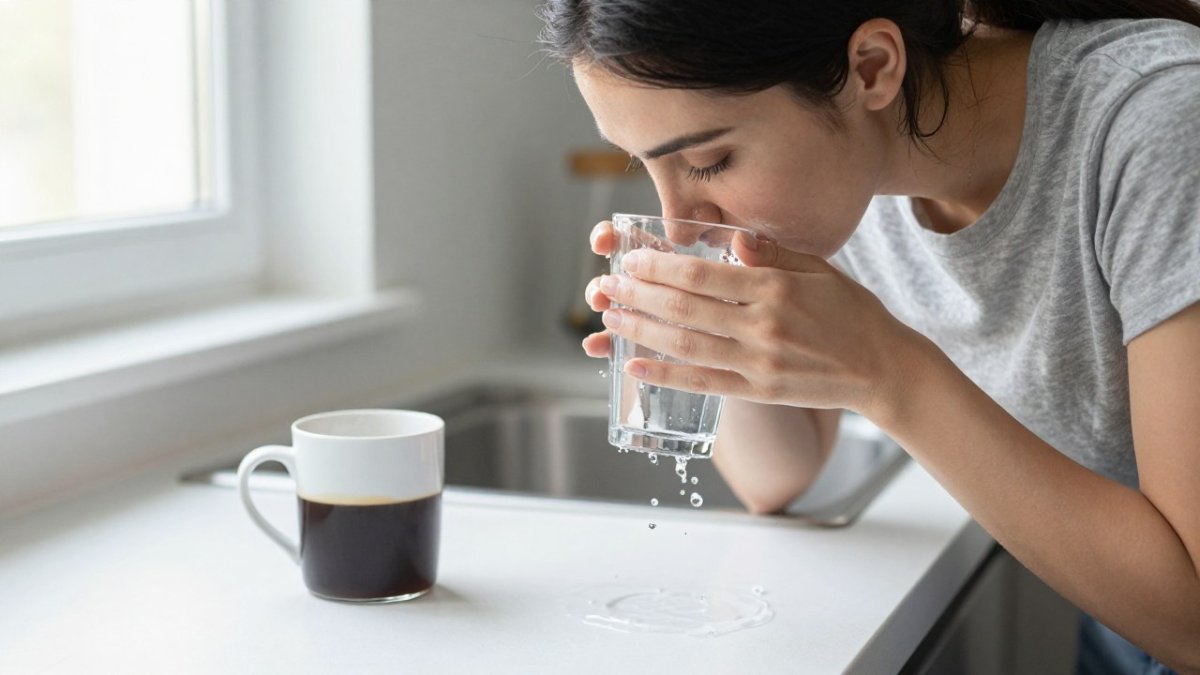
Follow these simple steps:
- Sip water during or right after your coffee.
- Swish plain water for 30 seconds to clear the mouth.
- Wait about 30 minutes before brushing.
Why brushing right after coffee can wear enamel
Coffee is acidic, and acid softens enamel for a short time. Brushing during that window can scrub away the softened surface. Waiting about 30 minutes lets your saliva rebuild the enamel before you brush.
Many people do the opposite and brush immediately, thinking it removes the stain faster, but learning how to remove coffee stains from teeth without damaging enamel means waiting, since that habit can cause more harm than good over the long run.
Step 2: Choose the Best Product to Remove Coffee Stains From Teeth
Product choice is where most enamel damage happens, because the strongest stain removers are also the most aggressive. Match the product to your stain level and your sensitivity, and start with the mildest option that works.
Whitening toothpaste and abrasive limits
Whitening toothpaste removes surface film with mild abrasives plus chemical polishers such as modified silicone or enzymes. The abrasive strength is measured on the RDA (radioactive dentin abrasion) scale. Toothpaste abrasiveness is often measured on the RDA scale, and enamel-conscious dental professionals generally favor gentler pastes for routine brushing.
Look for the ADA Seal of Acceptance on products that have been reviewed for safety and effectiveness (the American Dental Association). Use a soft-bristled brush and light pressure; the brush does as much damage as the paste when you press hard.
Watch out: if a toothpaste feels gritty between your fingers or the label pushes "maximum strength" abrasives for daily use, treat it as an occasional product, not your everyday paste.
Whitening strips and peroxide products
Whitening strips and gels use hydrogen peroxide or carbamide peroxide to bleach stains below the surface. Concentrations vary by product, so check the label of any over-the-counter strip or gel and ask your dentist about in-office options. They work better on coffee stains than toothpaste alone, but peroxide is the ingredient most likely to cause transient tooth sensitivity and gum irritation.
Follow the label exactly: do not leave strips on longer than directed, do not stack products, and do not use them more often than the package allows. Stop if you get sharp sensitivity, white patches on the gums, or gum burning, and give your teeth a break before resuming. People with exposed roots, thin enamel, untreated cavities, or existing sensitivity should get a dental check before starting peroxide products.
Fluoride and sensitivity support
Fluoride toothpaste is the enamel-safe baseline and should stay in the routine even while you whiten. If sensitivity appears during a whitening course, switch to a sensitivity-formulated fluoride paste, space out treatments, and consider pausing. A dentist can also apply fluoride varnish or recommend a lower-concentration protocol.
What to skip
Use caution with charcoal pastes, strong acid-based "whitening" rinses, and any product that promises dramatic results without ingredient disclosure. Fluoride toothpaste and professional cleaning remain the foundation of stain care.
Each product type has a different strength and risk, so compare them before you start.
| Product | Best for | Key caution |
|---|---|---|
| Whitening toothpaste | Light surface film | Gritty, high-abrasive pastes wear enamel over time |
| Whitening strips and gels | Surface stains below the surface film | Peroxide can cause sensitivity and gum irritation |
| Fluoride toothpaste | Everyday enamel protection | Keep it in the routine even while whitening |
| Sensitivity fluoride paste | Teeth that hurt during whitening | Switch to it if sensitivity appears |
| Charcoal paste and acidic rinses | Not recommended | Little supporting evidence and potential enamel harm |
Step 3: Does Baking Soda Remove Coffee Stains From Teeth Safely?
Baking soda can lift light surface stains because it is a gentle abrasive. Many people brush with a small amount once or twice a week. It is far less harsh than some home scrubs, but it is still abrasive.
Use it carefully. Mix a pinch with your regular toothpaste rather than using it pure. Stop if you notice sensitivity or a rough feeling on your teeth. Baking soda does not reverse deep or intrinsic stains.
Evidence on natural remedies is limited. Fluoride toothpaste and professional cleaning are the well-established approaches for stain care, so treat home remedies as a supplement, not a replacement.
Step 4: How to Remove Coffee Stains From Teeth Quickly at Home
"Quickly" and "without damaging enamel" pull in opposite directions, so the right routine depends on how heavy your stain is and how sensitive your teeth are. Use the tier that matches your situation rather than running every method at once.
Tier 1, Light surface stain (daily maintenance)
- Rinse with plain water after every cup of coffee.
- Brush twice a day with a fluoride whitening toothpaste and a soft brush.
- Floss daily to clear plaque where pigment collects between teeth.
- Use a straw for iced coffee and sip water between hot cups.
- Book a professional cleaning every six months.
This tier is enough for most people who drink one or two cups a day and have no visible buildup.
Tier 2, Moderate stain (two-week push)
- Keep the Tier 1 habits.
- Add over-the-counter whitening strips for the labeled course, usually about two weeks, only if your teeth are not sensitive.
- Use baking soda as a pinch mixed into toothpaste once or twice a week, not pure and not daily.
- Pause all whitening products for a few weeks after the course, then reassess.
Tier 3, Persistent or deep stain (professional assessment)
If two weeks of Tier 2 does not move the color, or the stain is gray or inside the tooth, stop adding home products. Persistent stain is a signal to get a dental exam and a professional cleaning or whitening plan rather than to escalate abrasives or peroxide at home.
Evidence grading for home remedies
- Supported for surface stain: fluoride whitening toothpaste, professional cleaning, supervised peroxide whitening.
- Mildly supported, use with care: baking soda as a gentle abrasive, diluted and occasional.
- Limited evidence: charcoal paste, oil pulling for stain removal, acidic rinses, and "natural" whitening mixtures with no fluoride.
- Potentially harmful: brushing with pure abrasives, undiluted peroxide, and brushing immediately after coffee.
Watch out: combining strips, baking soda scrubs, and a high-abrasive toothpaste in the same week is the most common way people trade a little stain removal for real enamel wear and sensitivity.
Decision points
- Stain lifts with Tier 1 within a few weeks: stay on maintenance.
- Stain fades but sensitivity appears: drop to a sensitivity fluoride paste and pause whitening.
- Stain does not change after Tier 2: book a professional cleaning and stain assessment.
- Stain is in one spot, gray, or painful: see a dentist before any home whitening.
Preventive Habits to Keep Coffee From Staining Your Teeth
Prevention beats cleanup. A few small changes can keep stains from building up:
- Drink coffee through a straw to limit contact with front teeth.
- Sip water between cups.
- Brush and floss daily to remove plaque where stains collect.
- Limit how long you sip coffee throughout the day.
- Schedule a professional cleaning every six months.
Consistent habits matter more than any single product.
Booking a Professional Cleaning and Stain Assessment at Franklin Dental Center
If home methods are not working, or if you are unsure what is causing the discoloration, a professional visit can help. At Franklin Dental Center in Tyler, Texas, our team can check whether your stain is on the surface or inside the tooth, and discuss options suited to your teeth.
Our office is focused on comfort for patients who feel nervous at the dentist. You can learn more about book a routine checkup in Tyler or see how a professional teeth cleaning works before you decide. If you are curious about cosmetic options, which cosmetic procedure fits your smile is a helpful place to start.
Ready to take the next step? Request an appointment at Franklin Dental Center to talk through your options.
Frequently Asked Questions
Can coffee stains on teeth go away on their own?
Surface coffee stains can fade partly with consistent brushing, flossing and regular professional cleaning, but they rarely disappear completely without help. Stains that have set into the tooth structure usually need professional treatment. Because enamel is thin and does not regenerate, the safest approach is prevention and gentle removal rather than aggressive scrubbing. If discoloration persists despite good hygiene, schedule a consultation so a dentist can identify the cause.
Does baking soda remove coffee stains from teeth?
Baking soda is mildly abrasive and can help lift surface stains when used occasionally with a soft-bristled brush. Its effect is modest, and frequent or vigorous use can wear enamel over time, which may increase sensitivity and make teeth look more yellow. It should not replace fluoride toothpaste or professional care. Use it sparingly, rinse thoroughly afterward, and stop if you notice tooth sensitivity.
What is the best product to remove coffee stains from teeth without damaging enamel?
Fluoride toothpaste labeled as whitening, used twice daily, is generally the gentlest option for surface stains because its abrasives are formulated for enamel safety. Whitening strips and peroxide-based products can lighten teeth more noticeably but may cause sensitivity or gum irritation if overused. Results and suitability vary by person, so ask your dentist which option fits your teeth and any existing dental work.
How can I avoid coffee stains on teeth in the first place?
Drink coffee with meals when possible, since saliva production increases during eating and helps wash away staining compounds. Rinse with water after each cup, use a straw for iced coffee, and wait about 30 minutes before brushing so softened enamel is not scrubbed. Keep up with twice-daily brushing, daily flossing and routine dental cleanings to remove plaque where stains collect.