 Listicle
How Long Does a Teeth Cleaning Take?
Last Updated: November 19, 2026
Quick Summary
A routine teeth cleaning typically takes about 30 to 60 minutes, covering the exam, scaling, polishing, and a short conversation about home care. Appointment length depends on your oral health, so your dental team can give you a realistic estimate for your visit.
- Heavy plaque and calculus can add 10-20 minutes to a cleaning appointment.
- A first visit at a new practice adds 10-15 minutes for records.
- X-rays add 5-10 minutes when imaging is due.
- Wait about 30 minutes before eating if fluoride was applied.
- Many patients return every six months for routine maintenance and a dental checkup.
Table of Contents
- How Long Does a Teeth Cleaning Take? A Realistic Time Breakdown
- What Happens During a Dental Cleaning
- How Long Does a Deep Dental Cleaning Take?
- Does Teeth Cleaning Hurt? What to Expect at Each Stage
- Teeth Cleaning From Dentist Cost: What Drives the Price
- Factors That Change How Long Your Appointment Runs
- After Your Cleaning: Care Tips and When to Book Again
- Request Your Next Cleaning Appointment
- Frequently Asked Questions
How Long Does a Teeth Cleaning Take? A Realistic Time Breakdown
A routine teeth cleaning typically takes about 30 to 60 minutes, and that range covers the exam, scaling, polishing, and a short conversation about home care. Appointment length depends on the patient's oral health, so your dental team can give you a realistic estimate for your visit. The difference usually comes down to how much plaque and tartar have built up since your last dental checkup, plus whether X-rays are due. Below, we break down exactly where the time goes, why deep cleanings run longer, and how to plan your day around the dental chair time.
What Happens During a Dental Cleaning
A professional dental cleaning is a preventive appointment where a dental hygienist removes dental plaque and calculus from your teeth, then checks your gums and overall oral health. The visit follows a predictable order, and knowing it takes the surprise out of the chair time.
Step by Step: From Exam to Polishing
- Patient history and oral examination (5 minutes). The hygienist reviews your health history and looks inside your oral cavity for obvious concerns.
- Diagnostic imaging (5-10 minutes, if due). X-rays help spot decay between teeth and below the gumline.
- Scaling and tartar removal (10-20 minutes). Hand instruments or an ultrasonic scaler break up plaque buildup and calculus along the gumline.
- Polishing (5 minutes). A gritty paste and rotating brush smooth the enamel surface.
- Fluoride treatment (1-2 minutes). A protective varnish or gel is applied when appropriate.
- Oral health assessment and treatment plan (5 minutes). You leave knowing what needs attention and when to return.
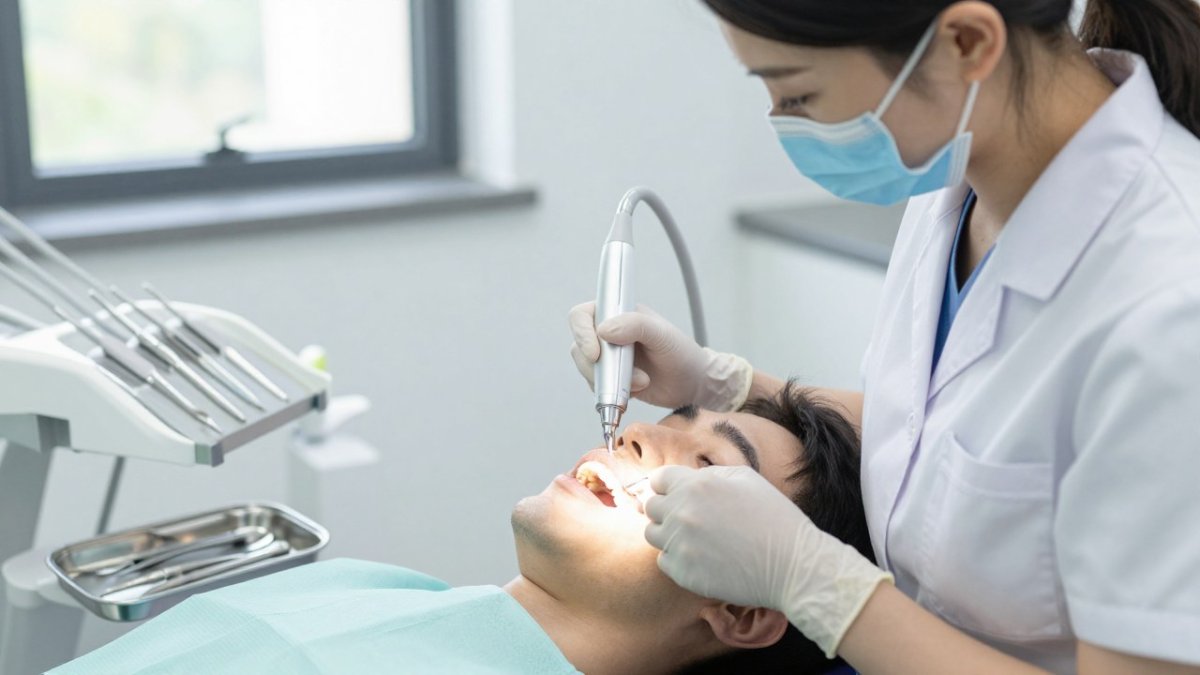
Heavy calculus from years of skipped visits generally takes longer to remove than light plaque.
How Long Does a Deep Dental Cleaning Take?
A deep dental cleaning, clinically called scaling and root planing, is often completed over more than one visit (the American Dental Association). Your dentist can explain how the procedure will be scheduled for your situation. The goal is the same as a routine cleaning, but the target is below the gumline, and that changes both the time and the technique.
Periodontal disease changes the math. When gum disease has caused pockets between the teeth and gums, the hygienist must reach under the gum tissue to remove calculus and smooth the root surfaces. That is slower, more detailed work than a standard prophylaxis. Many practices also numb the area first, which adds setup time. The general steps for a deep cleaning on one side of the mouth include reviewing periodontal charting and pocket depths, numbing the area when needed, scaling and root planing below the gumline, and flushing the area before giving care instructions.
Treatment is sometimes split by side, and some dental offices may treat both sides in one appointment depending on the case. Ask which approach your dentist recommends and why.
Watch out: skipping the follow-up deep cleaning visit because the first side felt fine is a common mistake. Unfinished root planing leaves active periodontitis untreated on one side, and gum disease does not resolve on its own. The re-evaluation visit is also where your dentist measures whether pockets have shrunk; without it, you cannot tell whether the treatment worked.
Does Teeth Cleaning Hurt? What to Expect at Each Stage
A routine teeth cleaning is not painful for most people, though you may feel pressure, scraping, and cold water spray. Discomfort tends to show up in two places: around the gumline when tartar is heavy, and during the polishing step if your gums are already inflamed from gingivitis.
Here is what each stage actually feels like:
- Exam and X-rays: No sensation beyond the bitewing holder resting in your mouth.
- Scaling: A vibrating sensation from the ultrasonic scaler, plus a mild tug near the gumline. Sensitive teeth may twinge.
- Polishing: Gritty paste and a spinning brush. Cool and slightly messy, not painful.
- Fluoride: Nothing beyond a coated feeling for a few minutes.
If anxiety is the real barrier, say so when you book. Our team at Franklin Dental Center builds in extra time and explains each step before it happens, because a patient who knows what is coming tenses up less. For practical coping techniques, read our guide on the best ways to manage dental anxiety for adults.
Teeth Cleaning From Dentist Cost: What Drives the Price
Pricing for a teeth cleaning depends on factors such as whether X-rays are included and whether the visit is a routine cleaning or a deep cleaning. Current prices and a quote for your situation are best obtained directly from Franklin Dental Center.
What moves the number up or down:
-
Routine versus deep cleaning. Scaling and root planing is a more involved procedure and costs more than a standard cleaning.
-
Imaging. Bitewing or full-mouth X-rays add to the visit when they are due.
-
Treatment add-ons. Fluoride, sealants, or a follow-up visit each carry their own charge.
If cost is your main worry, ask for a written treatment plan before anything begins so there are no surprises on the bill. You can review our affordable dental cleaning services to see how we keep routine care within reach, and patients without coverage can check our breakdown of dental checkup costs without insurance in Texas to plan ahead.
Factors That Change How Long Your Appointment Runs
Several variables can lengthen a cleaning. Knowing them can help you plan your visit.
| Factor | Effect on Time | What to Do |
|---|---|---|
| Heavy plaque and calculus | Adds 10-20 minutes | Book a longer slot if it has been years |
| First visit at a new practice | Adds 10-15 minutes for records | Arrive early with your history |
| X-rays due | Adds 5-10 minutes | Ask when imaging was last taken |
| Gum inflammation or bleeding | Adds time for careful scaling | Mention tender gums when booking |
| Dental anxiety | Adds explanation time | Request extra time when scheduling |
| Multiple treatments in one visit | Extends the appointment | Ask about combining procedures |
Combining a cleaning with other treatments in one sitting can reduce the number of trips needed. As Sheila B. put it, having several treatments performed at once "eliminated multiple visits, which saves me time."
Time Added to a Teeth Cleaning Appointment by Factor
After Your Cleaning: Care Tips and When to Book Again
Mild gum tenderness after scaling is common, especially after significant tartar removal. Here is how to protect the work just done, with timing that matches what most hygienists recommend:
- Eating and drinking: Wait about 30 minutes before eating if you had fluoride applied. If you had a deep cleaning with local anesthesia, wait until the numbness fully wears off (usually two to four hours) before chewing, because you can bite your cheek or tongue without feeling it.
- Temperature and acidity: Avoid very hot, very cold, or highly acidic food and drinks for a few hours if your teeth feel sensitive. Sensitivity after a cleaning is common and usually fades within a few days to a week.
- Brushing: Brush gently with a soft-bristled brush the same day, but avoid scrubbing the gumline hard for the first 24 hours. Keep up your normal oral hygiene routine.
- Flossing: Floss daily, even if the gums bleed slightly at first. Bleeding usually settles as inflammation calms. If bleeding persists beyond a week, call your dentist.
- Sensitivity management: If teeth feel sensitive, a desensitizing toothpaste used for a few weeks often helps. Ask your hygienist which one they recommend.
- What to watch for: Mild tenderness and slight bleeding are expected. Sharp pain, swelling, fever, or bleeding that does not stop are not, and you should call the office.
Many patients return every six months for routine maintenance and a dental checkup, though your dentist may recommend a different interval. If you had a deep cleaning, your dentist may recommend a follow-up visit to check healing, so follow the treatment plan your dentist gives you.
Request Your Next Cleaning Appointment
The best way to keep a cleaning short is to keep it regular. Plaque that is removed regularly is generally easier to clear than calculus that has built up over time, which can lengthen appointments. If you are due, our team can walk you through what happens during a deep cleaning for gum disease so you know what to expect, or you can follow our step-by-step guide to booking a routine dental checkup and get on the schedule this week. Franklin Dental Center provides comprehensive, personalized dental care for patients of all ages in the Tyler, Texas area, including routine checkups and restorative and cosmetic dentistry. Get started with Franklin Dental Center and keep your six-month rhythm without the guesswork.
A cleaning that runs long is rarely a bad sign. It usually means someone is being thorough about your gums. If it has been more than a year since your last visit, book a longer slot than you think you need and let the exam set the pace.
Frequently Asked Questions
Can I eat immediately after a teeth cleaning?
You can usually eat right after a routine cleaning, but wait about 30 minutes if fluoride treatment was applied so it can set. If you had a deep cleaning with numbing, wait until the numbness fades to avoid biting your cheek or tongue. Stick to soft foods and lukewarm drinks for the rest of the day if your gums feel tender, and avoid very hot, spicy, or acidic foods that can sting freshly scaled gum tissue.
How long does a standard dental cleaning take for adults?
Most routine cleanings for adults run 30 to 60 minutes from the moment you sit in the chair. That window covers the oral examination, scaling and tartar removal, polishing, and a short conversation about your home care. If it has been several years since your last visit, or if X-rays are due, plan for closer to 60 minutes. First appointments can run longer because a patient history is also taken.
Does the duration of a dental cleaning change if I have gum disease?
Yes. Gingivitis and periodontitis add time because the hygienist needs to clean below the gumline, and that is typically done with scaling and root planing rather than a routine prophylaxis. A deep cleaning is sometimes completed over more than one visit, depending on the case. Your dentist will assess your periodontal health and set a treatment plan before scheduling.
What is the 2-2-2 rule for teeth?
The 2-2-2 rule is a simple home care guideline: brush twice a day for two minutes each time, and see the dentist for a checkup and cleaning every two years. Some dental offices recommend a visit every six months instead, especially for patients with a history of cavities or gum disease. Ask your dentist which interval fits your oral health, since preventive care schedules are set case by case.
Can I return to work immediately after a routine dental cleaning?
In most cases, yes. A routine cleaning with polishing and fluoride does not require recovery time, and you can drive yourself and go straight back to work. If you received local anesthetic for a deep cleaning, wait until the numbness wears off, usually a couple of hours, before eating or drinking hot beverages. Plan a lighter schedule for the rest of the day if your gums are sensitive.