 How-to
Book Emergency Dental Appointment: Your Tyler Guide
Table of Contents
- When to Seek Emergency Dental Care
- What to Say When Calling an Emergency Dentist
- How to Book a Same-Day Dentist Appointment
- What to Expect at an Emergency Dental Appointment
- Dental Abscess Emergency Care: Symptoms and Treatment
- What to Do While Waiting for Your Emergency Appointment
- Booking Your Emergency Dental Appointment at Franklin Dental Center
- Frequently Asked Questions
Last Updated: October 21, 2026
When to Seek Emergency Dental Care
A dental emergency requires immediate professional attention to prevent serious complications. Common emergencies include severe toothache, knocked-out teeth, broken teeth, lost fillings, facial or jaw swelling, and unstoppable bleeding, all demanding urgent dental care, not a routine appointment.
The distinction matters: a persistent dull ache might wait until tomorrow, but severe pain, facial swelling, or signs of infection cannot.
Many people delay because they're unsure whether their situation qualifies as urgent. The safest approach: if you're asking whether it's an emergency, contact a dental office immediately.
Knocked-out teeth, severe bleeding, facial swelling, and intense pain warrant immediate attention. Broken teeth, lost fillings, and moderate pain may also need same-day care if they cause significant discomfort or affect eating or speaking.
What to Say When Calling an Emergency Dentist
Most dental offices triage emergency calls with a short set of questions. Having the answers ready gets you a same-day slot faster. Use the script below as a template, just have the facts on hand.
The 30-second opening script. Lead with the problem, the timing, and the ask:
"Hi, my name is [name]. I'm calling about a dental emergency. [Describe the problem in one sentence, for example: 'I broke my upper right molar on a popcorn kernel about two hours ago and it's sharp and bleeding a little.'] I'm in significant pain and I'd like to know if you have a same-day emergency appointment today."
That opening gives the scheduler three things: the problem, how long ago it happened, and a direct request for same-day care.
What the office will ask you. Expect a short intake, usually in this order:
- What happened and when. Exact timing matters, a knocked-out tooth is a minutes-to-hours problem, while a lost filling can often wait a day or two.
- Pain level on a 1-10 scale. Be honest. "It's a 9 and I can't sleep" moves you up the list; "it's a little sore" may get you a routine slot.
- Swelling, fever, or trouble swallowing or breathing. These are the red-flag questions. Answer them directly and do not downplay them.
- Bleeding that won't stop after 10-15 minutes of firm pressure.
- Whether you are an existing patient. New-patient emergencies are usually accommodated, but the office needs to know so it can pull the right paperwork.
- Insurance and payment method. Have your card and ID ready; some offices verify benefits before confirming the slot.
- Medications, allergies, and medical conditions. Blood thinners, heart conditions, and diabetes change how the dentist plans treatment.
Triage by symptom, what to say and how fast to act. Use this quick guide to describe your situation accurately and decide how urgently to push for a same-day visit.
| Symptom | What to say on the phone | Urgency |
|---|---|---|
| Severe, throbbing pain that wakes you up | "Constant throbbing pain, 8 out of 10, started last night, not relieved by ibuprofen." | Same-day; call at opening |
| Facial or jaw swelling, fever, trouble swallowing | "My face is swollen, I have a fever, and it hurts to swallow." | Emergency, call now; ER if you cannot reach a dentist |
| Knocked-out permanent tooth | "My tooth was knocked out about 20 minutes ago; I have it in milk." | Emergency, call immediately; time-critical |
| Broken or cracked tooth with sharp edges | "I broke a tooth and the edge is sharp; my tongue is getting cut." | Same-day |
| Lost filling or crown, mild pain | "My filling came out; it's sensitive but not severe." | Next available, often within 24-48 hours |
| Bleeding after extraction that won't stop | "I had a tooth pulled yesterday and it's still bleeding after 20 minutes of pressure." | Call now; ER if bleeding is heavy or you feel faint |
| Mild ache, no swelling, no fever | "A tooth is a little sensitive to cold." | Routine appointment is usually fine |
After-hours and weekend calls. If you reach a voicemail, listen to the full message, many practices route emergency calls to an on-call dentist or nurse line.
How to Book a Same-Day Dentist Appointment
Booking a same-day dentist appointment requires acting quickly. Call as soon as you recognize you have an emergency, many practices hold same-day slots, but they fill rapidly.
When you call, explain that you need emergency dental services and ask if same-day appointments are available. Some offices have a dedicated emergency line, ask if that applies.
Have your information ready before calling: insurance details, allergies or medical conditions, and the exact nature of your problem.
Ask about payment before your appointment if cost is a concern. Many offices offer payment plans or accept multiple insurance types.
Write down the appointment details immediately, date, time, location, and any special instructions, and set a phone reminder. Ask how early to arrive and whether you can complete paperwork beforehand.
What to Expect at an Emergency Dental Appointment
An emergency visit is structured differently from a routine cleaning.
Before you arrive. Confirm three things when you book: the address and parking instructions, whether to arrive 10-15 minutes early for paperwork, and what to bring.
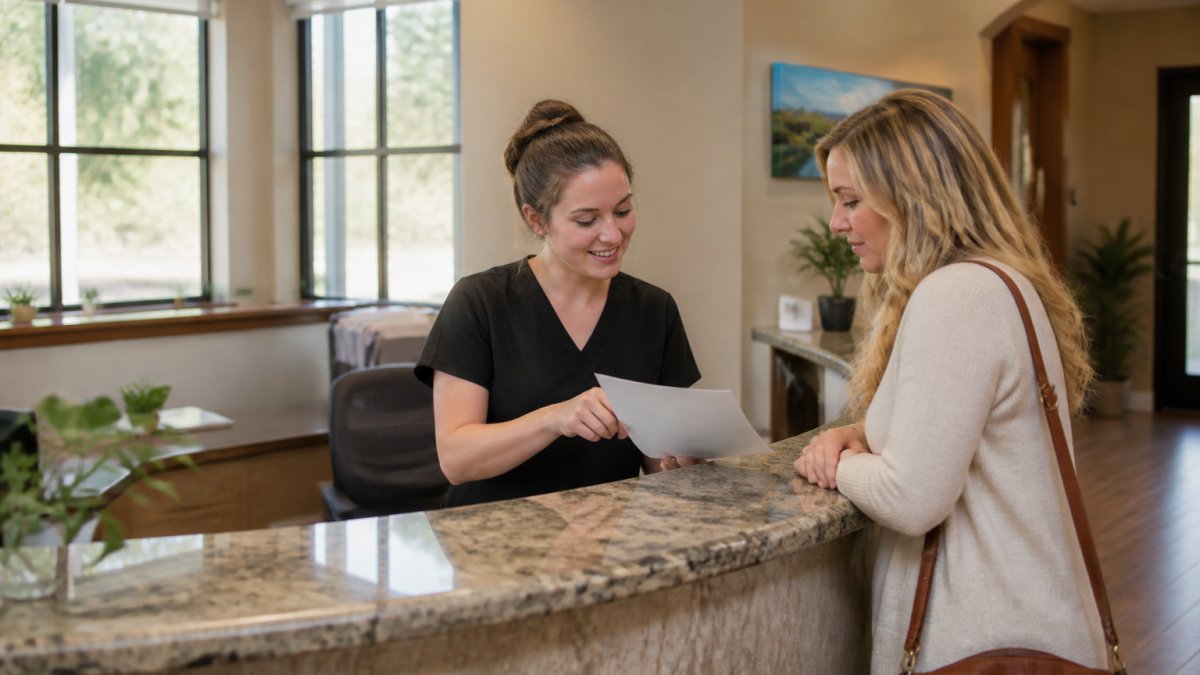
The first 10 minutes: intake and triage. The front desk will confirm your information, collect payment or insurance details, and ask you to sign consent and financial responsibility forms.
The exam. The dentist will ask what happened, when, what makes the pain better or worse, and whether you've had this problem before.
The treatment. Emergency treatment is usually one of a handful of procedures:
- Drainage of an abscess, a small incision to release pus, often followed by antibiotics and a follow-up for root canal or extraction.
- Temporary filling or crown, to seal a broken tooth or lost filling until a permanent restoration can be placed.
- Tooth extraction, when a tooth is too damaged or infected to save.
- Root canal (sometimes same-day), when the pulp is infected but the tooth can be preserved.
- Replantation of a knocked-out tooth, time-critical; the sooner the tooth is back in the socket, the better the chance it survives.
- Splinting of a loose tooth, stabilizing a tooth that has been traumatized.
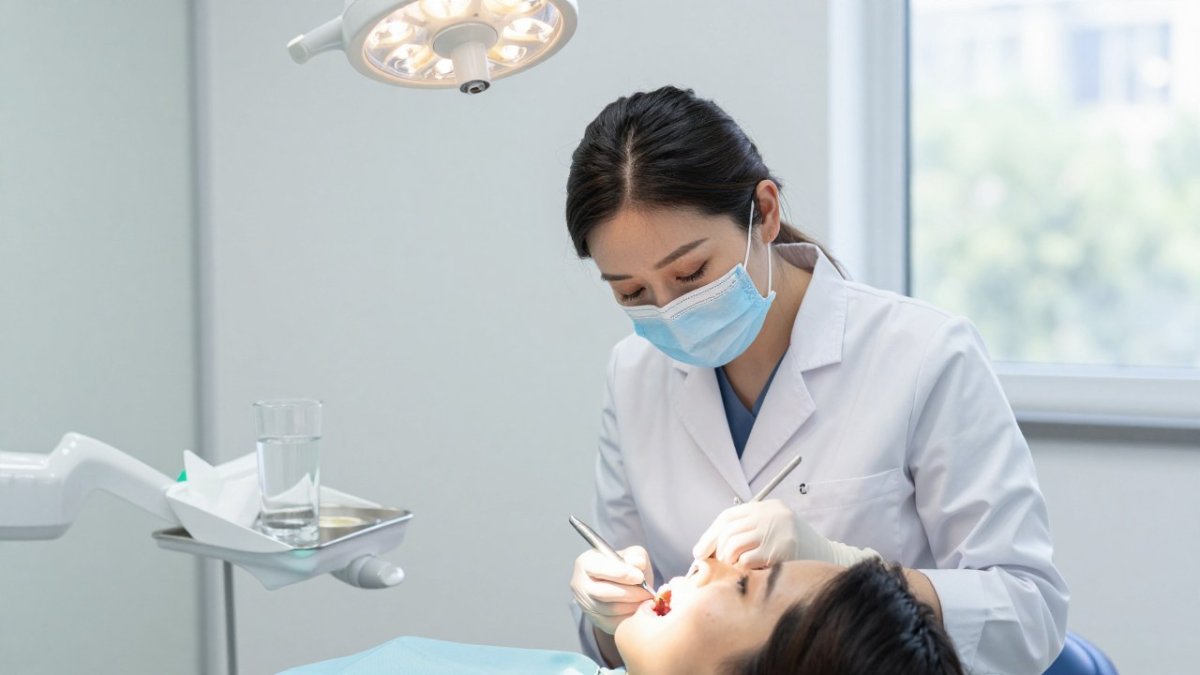
Local anesthesia is standard before any painful procedure. If you have dental anxiety, tell the front desk at check-in, many offices offer nitrous oxide, oral sedation, or extra time to talk through the plan.
The cost conversation. Emergency visits usually include exam, X-ray, and treatment fees. With dental insurance, the office can often verify benefits in real time and estimate your out-of-pocket portion before treatment.
After treatment. The dentist will explain what was done, what to expect during healing, and when to schedule follow-up care.
Dental Abscess Emergency Care: Symptoms and Treatment
A dental abscess is a bacterial infection that forms a pocket of pus near the tooth root or in the gums. It requires emergency dental care because the infection can spread if untreated. Recognizing the symptoms helps you seek treatment quickly.
If you suspect a dental abscess, seek emergency dental care immediately, the infection can spread to your sinuses, brain, or bloodstream. Do not wait it out or treat it at home.
Treatment typically involves draining the infection and removing its source. The dentist may extract the tooth or perform a root canal to save it, depending on severity and location. Antibiotics are often prescribed, and pain relief medication helps manage discomfort during healing.
What to Do While Waiting for Your Emergency Appointment
While waiting for your emergency dental appointment, take steps to manage pain and prevent the problem from worsening.
Apply a cold compress to the outside of your cheek for 15 minutes at a time to reduce swelling and numb the area.
Rinse gently with warm salt water several times a day, half a teaspoon of salt in a cup of warm water, swished for 30 seconds, to reduce inflammation and kill bacteria. Do not swallow it.
If you've lost a filling or broken a tooth, avoid chewing on that side. For a knocked-out tooth, handle it by the crown only, never touch the root.
Avoid smoking and alcohol, which slow healing and increase pain. Stay hydrated, get adequate rest, and keep your head elevated, even while sleeping, to reduce swelling.
| Action | Purpose | Timing |
|---|---|---|
| Cold compress | Reduce swelling and numb pain | 15 minutes at a time |
| Salt water rinse | Reduce inflammation and bacteria | 3-4 times daily |
| Pain reliever | Manage discomfort | Per package directions |
| Soft foods only | Prevent further damage | Until appointment |
| Head elevation | Reduce facial swelling | Especially while sleeping |
Booking Your Emergency Dental Appointment at Franklin Dental Center
When you need an emergency dental appointment in Tyler, Franklin Dental Center is ready to help. We maintain same-day availability for urgent situations, and Dr.
Calling Franklin Dental Center for an emergency dental appointment is straightforward. Have your symptoms ready and let us know the urgency; our scheduling team will fit you in as quickly as possible.
Our approach focuses on your comfort and immediate relief.
Franklin Dental Center handles multiple treatments in a single visit when possible, so you don't have to return repeatedly.
We accept a variety of insurance plans and offer flexible payment options to make emergency care accessible. Don't let cost concerns stop you from getting help.
Frequently Asked Questions
What qualifies as a dental emergency?
A dental emergency includes severe toothache pain, a knocked-out tooth, a broken or cracked tooth, bleeding that won't stop, swelling in the jaw or face, a lost filling or crown, or signs of infection like an abscess. Dental injuries from trauma, severe sensitivity, or pain that prevents eating or sleeping also warrant emergency care. If you're unsure whether your situation is urgent, call your dentist to discuss symptoms.
What should I tell the dentist when I call about a dental emergency?
Describe your main symptom first: tooth pain, swelling, bleeding, or injury. Explain when it started and how severe it is on a scale of 1 to 10. Mention any trauma or accident if applicable. Tell them if you have fever, swelling in your face or jaw, or difficulty swallowing, these can indicate infection. Share your availability and whether you need same-day care. Have your insurance information ready if asked.
Can I get a same-day emergency dental appointment?
Many dental offices hold same-day or emergency appointment slots for urgent cases. Availability depends on the office's schedule and the time you call. Calling early in the day increases your chances of same-day care. If your office cannot accommodate you immediately, ask about urgent care alternatives or whether they can refer you to an emergency dentist nearby.
What should I do while waiting for an emergency dental appointment?
For tooth pain, rinse your mouth with warm salt water and take over-the-counter pain relief as directed on the label. Apply a cold compress to the outside of your cheek for 15-minute intervals to reduce swelling. Avoid very hot, cold, or hard foods. If you've lost a tooth, handle it by the crown only, rinse it gently, and try to place it back in the socket or store it in milk. For bleeding, apply gentle pressure with clean gauze. Avoid aspirin placed directly on the gum.
When dental pain strikes, waiting only makes things worse. Franklin Dental Center provides same-day emergency dental services with the gentle, experienced care you need. Our team uses modern technology and a patient-centered approach to deliver rapid relief while building long-term oral health. Call us now to schedule your emergency dental appointment and experience why families throughout the Tyler area trust Franklin Dental Center for their dental care needs.