 blog
Can You Get a Dental Crown in One Single Visit? 7 Facts
Table of Contents
- What a Same-Day Crown Is and How It Works
- Same-Day Crown vs. Traditional Crown: Key Differences
- Who Qualifies for a One-Visit Crown (and Who Doesn't)
- How Long Does a Same-Day Crown Appointment Take?
- Same-Day Crowns Disadvantages and Limitations
- How Much Does a Same-Day Crown Cost?
- What Happens If the Crown Doesn't Fit or Milling Fails
- Aftercare and Warning Signs to Watch
- Frequently Asked Questions
Last Updated: November 18, 2026
What a Same-Day Crown Is and How It Works
So can you get a dental crown in one single visit? Yes, you can. A same-day crown is a custom ceramic restoration that some dentists design, mill, and bond onto a damaged tooth in a single appointment, avoiding a temporary crown and a second trip in many cases.
The process generally works this way: your tooth is scanned, the crown is designed on a screen, and a chairside milling machine carves it from a solid block of ceramic. Whether your dentist offers this option is something to confirm at a consultation.
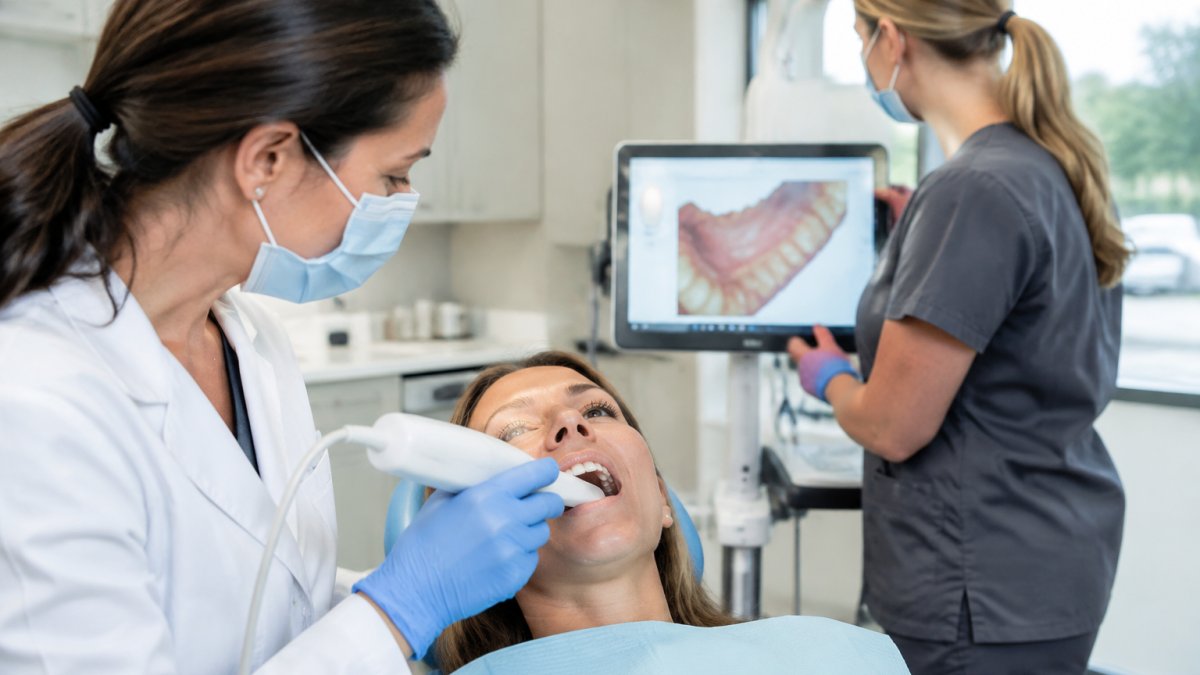
Digital Scanning and Computer-Aided Design
A digital impression starts the visit. Instead of a tray of gooey paste, a small intraoral scanner sweeps over your tooth and builds a 3D model on screen. The dentist then shapes the crown design in computer-aided design software, matching your bite and the shade of your other teeth.
Chairside Milling and Fitting
Chairside milling turns that design into a real crown. A milling machine carves the ceramic crown from a single block, usually in well under an hour. The dentist checks the fit, adjusts your bite, and cements it in place with dental cement.
If you want to know how to get ready for treatment day, our guide on how to prepare for dental crown treatment walks through what to expect.
Same-Day Crown vs. Traditional Crown: Key Differences
If you are wondering can you get a dental crown in one single visit, the biggest difference is time. A traditional crown takes two or more visits and a dental laboratory makes the crown in between. A one-visit crown skips the lab and the temporary crown entirely.
| Feature | Same-Day Crown | Traditional Crown |
|---|---|---|
| Number of visits | One | Two or more |
| Who makes the crown | Chairside milling machine | Off-site dental lab |
| Temporary crown | Not needed | Worn between visits |
| Impression method | Digital scan | Putty or digital |
| Typical wait | Same appointment | Days to weeks |
Both types use tooth-colored materials and aim for the same result: a custom crown that protects a damaged tooth. The trade-off is convenience versus the lab's ability to fine-tune shade and shape over several days.
Who Qualifies for a One-Visit Crown (and Who Doesn't)
Candidacy depends on the individual case, and not every patient with a damaged tooth will qualify. Good candidacy depends on the tooth's location, how much healthy structure remains, and whether the dentist can mill a crown that fits your bite.
You are a strong candidate if:
- You need one crown on a back tooth
- Your tooth has enough structure left after tooth preparation
- Your bite is stable and your gums are healthy
You may not qualify if:
- The tooth is cracked below the gumline
- You need a crown on a front tooth with complex shading
- You grind heavily or have an unstable bite
Not sure whether you need a crown at all? Our article on how to tell if you need a dental crown covers the warning signs.
How Long Does a Same-Day Crown Appointment Take?
Plan on a longer single visit, not a quick one. Appointment length varies by dentist and case, so ask your dentist how long a same-day crown visit is expected to take.
Here is the rough breakdown:
- Numbing and tooth preparation - the longest clinical step
- Digital scan - a few minutes
- Crown design - done chairside
- Milling - often under an hour
- Fitting and cementing - the final step
Appointment time varies by tooth and case.
Same-Day Crowns Disadvantages and Limitations
Same-day crowns are not perfect, and honest dentists will say so. The main same-day crowns disadvantages are limited shade options, less lab artistry for front teeth, and a design that depends on the dentist's software skill.
Other limits to know:
- Chairside milling offers fewer material choices than a full lab
- Front teeth may need a lab-made crown for the best natural appearance
- Some cases need a dental laboratory for complex bites
- Milling can occasionally fail, which adds time
Crown durability and crown lifespan depend more on the material, your bite, and your home care than on whether a lab or a machine made the crown.
How Much Does a Same-Day Crown Cost?
There is no single price for a same-day crown, but the cost is not a mystery either. Most practices build the fee from the same components, and understanding them lets you compare estimates instead of guessing. Fee structures for same-day crowns vary by practice, so ask directly whether a same-day appointment carries a separate charge compared with a traditional crown.
The main cost drivers are:
- Crown material. All-ceramic and zirconia crowns usually sit at the higher end; metal and porcelain-fused-to-metal crowns often cost less. Material choice can move the total by hundreds of dollars.
- Tooth location and complexity. A back tooth with a straightforward preparation is simpler than a front tooth that needs careful shade matching or a tooth that needs a core buildup first.
- Preparatory treatment. A root canal, post, or deep filling done at the same visit adds to the bill. These are separate procedures with separate fees, not part of the crown price.
- Imaging and diagnostics. Some offices include the digital scan and X-rays in the crown fee; others bill them separately. Ask which is true before you schedule.
- Geographic and practice variation. Fees vary widely by region and by practice overhead, which is why two offices a few miles apart can quote very different totals.
Dental insurance coverage for crowns depends on your specific plan. Plans typically cover a percentage of the allowed amount after your deductible and may cap annual benefits, so review your plan terms. Two details matter most: whether the plan pays the same for a chairside-milled crown as for a lab crown, and whether the crown falls under a waiting period for major services. Call your insurer with the relevant procedure code and ask for the allowed amount and your estimated out-of-pocket cost in writing.
If you do not have insurance, ask the office about the payment options it offers, and request a written estimate that lists each procedure, its fee, and expected insurance payments. A written estimate is the single best protection against checkout surprises. Our guide on how dentists explain treatment costs shows the questions to ask so nothing surprises you at checkout.
What Happens If the Crown Doesn't Fit or Milling Fails
Fit adjustments are a normal part of crown placement in general. A crown that seats but sits slightly high or tight is commonly corrected by adjusting the bite or contacts and rechecking until the bite feels even.
More serious fit problems can occur in any crown procedure, and they may require additional time. Discuss scheduling with your dentist so you can allow for possible adjustments.
If a second attempt is also unsuccessful, a dentist may place a temporary crown and schedule a return visit.
Ask before treatment whether a remake would carry an additional fee, and confirm the answer in your written estimate. If a temporary is placed, follow the usual precautions: avoid sticky foods, do not floss aggressively around it, and call if it loosens. Our post on what to do if a temporary crown falls out on the weekend is worth saving.
Aftercare and Warning Signs to Watch
Treat a new crown like a real tooth, because it is now part of your bite. Mild tenderness for a few days is normal. Sharp pain, a crown that feels high, or one that loosens is not, and you should call your dentist.
Watch for these warning signs:
- Pain when you bite down, which can mean a bite adjustment is needed
- Sensitivity that does not fade after a week or two
- A crown that feels loose or rocks
- Swelling or gum irritation around the crown
Good home care keeps a dental restoration lasting longer. Brush, floss around the crown, and avoid chewing ice or hard candy on it. If you are ready to move forward, you can find reliable restorative dentistry services and book a visit.
A single-visit crown can save you time and one less numbing appointment, but it starts with an honest look at your tooth. At Franklin Dental Center, Dr. Donna Franklin-Pitts and our team focus on gentle, patient-centered care, from digital scanning to same-day treatment that fits your schedule. We accept many insurance plans, including Medicaid and CHIP for kids, and we work with you on flexible payment options. Get started with Franklin Dental Center and restore your smile in a single visit.
Frequently Asked Questions
Can a dentist really do a crown in one visit?
Yes, for many cases. A single visit crown is designed, milled, and cemented while you sit in the chair, although the appointment length varies by case. A dentist may scan the prepared tooth with an intraoral scanner, design the restoration in CAD software, and mill it from a ceramic block. Not every tooth qualifies, though. Severely damaged teeth, teeth needing root canal therapy first, or cases with limited bite clearance may still need a traditional lab-made crown over two appointments.
Are same-day crowns as strong as traditional crowns?
Modern chairside-milled ceramic crowns are made from materials such as lithium disilicate and zirconia, which are also used in lab-made restorations. Fit depends heavily on the dentist's preparation and scanning technique rather than on where the crown was made. Many same-day crowns perform well for years, but longevity varies by material, bite forces, grinding habits, and oral hygiene. Ask your dentist which ceramic they use and how it suits the tooth being restored.
What are the main disadvantages of same-day crowns?
Same-day crowns disadvantages include a longer single appointment, a slightly higher upfront fee at many practices, and less time for a lab technician to fine-tune shading in complex cosmetic cases. Some mills cannot produce every material, so your dentist may offer a limited menu of ceramics. Heavily damaged teeth and cases needing gum treatment or root canal therapy usually cannot be completed in one sitting. For straightforward restorations on back teeth, these limits rarely matter.
How much does a same-day crown cost, and does insurance cover it?
How much a same-day crown costs depends on the material, the tooth, and your location, and fees vary by practice, so compare estimates before deciding. Dental insurance coverage for crowns varies by plan, so confirm the exact terms with your plan. Ask the office for a written estimate before treatment, and ask about payment plans if you are paying out of pocket.