 blog
How to Know If Dental Sealants Are Safe for Children
Last Updated: November 20, 2026
Quick Summary
Dental sealants are safe for children, and the American Dental Association supports them as a safe, effective way to prevent cavities in kids. Most are made of a plastic resin that may contain trace BPA as a manufacturing byproduct, but exposure during placement is limited. Tell your dentist about any allergies to acrylates or methacrylates before the appointment.
- Sealants block cavity-causing bacteria from deep grooves in back teeth that a toothbrush cannot reach.
- Sealants can wear down or chip over time and may need reapplication.
- A sealant can hide decay if placed over an already-infected tooth, so a dental examination comes first.
- Ask your dentist which sealant material the practice uses and whether a different option is available.
- Children with deep pits and fissures or a history of cavities benefit most from sealants.
Table of Contents
- What Dental Sealants Are and How They Protect Back Teeth
- What Are Dental Sealants Made Of?
- Dental Sealants for Kids Pros and Cons
- BPA Exposure in Context: What Parents Should Know
- Sealant for Teeth for Child Side Effects and Allergic Reactions
- Sealant for Teeth for Child: How Long Does It Take?
- Which Children Benefit Most and When to Consider Sealants
- Request a Sealant Consultation at Franklin Dental Center
- Frequently Asked Questions
What Dental Sealants Are and How They Protect Back Teeth
Dental sealants are thin, protective coatings painted onto the chewing surfaces of back teeth to block food and bacteria from settling into deep grooves (the American Dental Association). For parents asking are dental sealants safe for children, the short answer is that major health organizations support their use in kids.
At Franklin Dental Center, we explain sealants to families every week. The concept is simple. Back teeth, called molars, have pits and fissures, which are narrow grooves that a toothbrush cannot reach. Sealants fill those grooves with a smooth resin barrier.
That barrier matters because tooth decay often starts in these hiding spots. A sealant is a noninvasive treatment that protects the enamel without drilling or removing tooth structure.
What Are Dental Sealants Made Of?
Most dental sealants are made of a plastic resin, usually a liquid that hardens under a curing light. The material bonds directly to tooth enamel and forms a smooth shield over the pits and fissures.
The resin may contain a small amount of bisphenol A, or BPA, as a trace byproduct of the manufacturing process. This is the detail that worries many parents, and it deserves an honest look rather than a quick dismissal.
The American Dental Association supports sealants as a safe, effective way to prevent cavities in children (New white paper highlights benefits of dental sealants).
Dental Sealants for Kids Pros and Cons
Sealants offer real protection, but they are not a magic shield. Here is the balanced picture we give families.
Pros:
- Sealants block cavity-causing bacteria from deep grooves in back teeth
- The application is quick and noninvasive
- Sealants can protect primary teeth and permanent molars during cavity-prone years
Cons:
- Sealants can wear down or chip over time and may need reapplication
- They do not protect the smooth sides of teeth, so fluoride and good brushing still matter
- A sealant can hide decay if it is placed over an already-infected tooth, so a dental examination comes first
- Some parents worry about chemical exposure, which we address below
The honest takeaway: for most children, the benefits of cavity prevention outweigh the risks. But the decision should fit your child, not a generic checklist.
BPA Exposure in Context: What Parents Should Know
BPA concerns come up in almost every conversation about sealant safety, so let's separate what the material contains from what a child actually absorbs. The distinction matters because presence and exposure are not the same thing.
Most dental sealants are made from a resin that can include bisphenol A as a trace manufacturing byproduct. The question researchers study is not whether BPA is detectable in the material, but how much, if any, migrates out during and after placement.
Exposure, when it occurs, is concentrated in a narrow window.
A common mistake is comparing sealant exposure to everyday sources without noting the scale.
If you have questions about BPA, ask your dentist which sealant material the practice uses and whether a different option is available for your child.
Parents should feel comfortable asking which sealant product will be used and how it is formulated.
Sealant for Teeth for Child Side Effects and Allergic Reactions
Watch out: an allergic reaction to a component of the resin is possible. Tell your dentist about any known allergies before the appointment, especially to acrylates, methacrylates, or adhesive materials used in dental products. A child with a known sensitivity to these compounds may need a different material or a modified approach.
Common minor issues include:
- Mild sensitivity right after placement, which usually fades quickly
- A sealant that feels high and needs a quick adjustment
- Slight gum irritation if the material touches the tissue during application
Signs of a true allergic reaction would include swelling, a rash, or breathing trouble. These are rare, but they are a reason to call the office right away. A child who is anxious about the visit can also benefit from a calm, gentle approach; our guide on caring for anxious children at the dentist walks parents through it.
Disclosing medical history goes beyond allergies. Tell the dentist about any chronic condition, medication, or prior reaction to dental materials. This is also the moment to raise alternatives and shared decision-making. Sealants are one option alongside fluoride varnish, routine brushing and flossing, and a monitoring approach for lower-risk children. A parent might reasonably ask whether a child with shallow grooves and low cavity risk needs sealants at all, or whether fluoride and regular checkups are enough.
Follow-up is part of the safety picture. Sealants can wear over time, so it is worth asking the dentist to check them at routine visits. Ask at the appointment how the sealants look and whether any need attention. That simple habit turns a one-time decision into ongoing preventive care.
Sealant for Teeth for Child: How Long Does It Take?
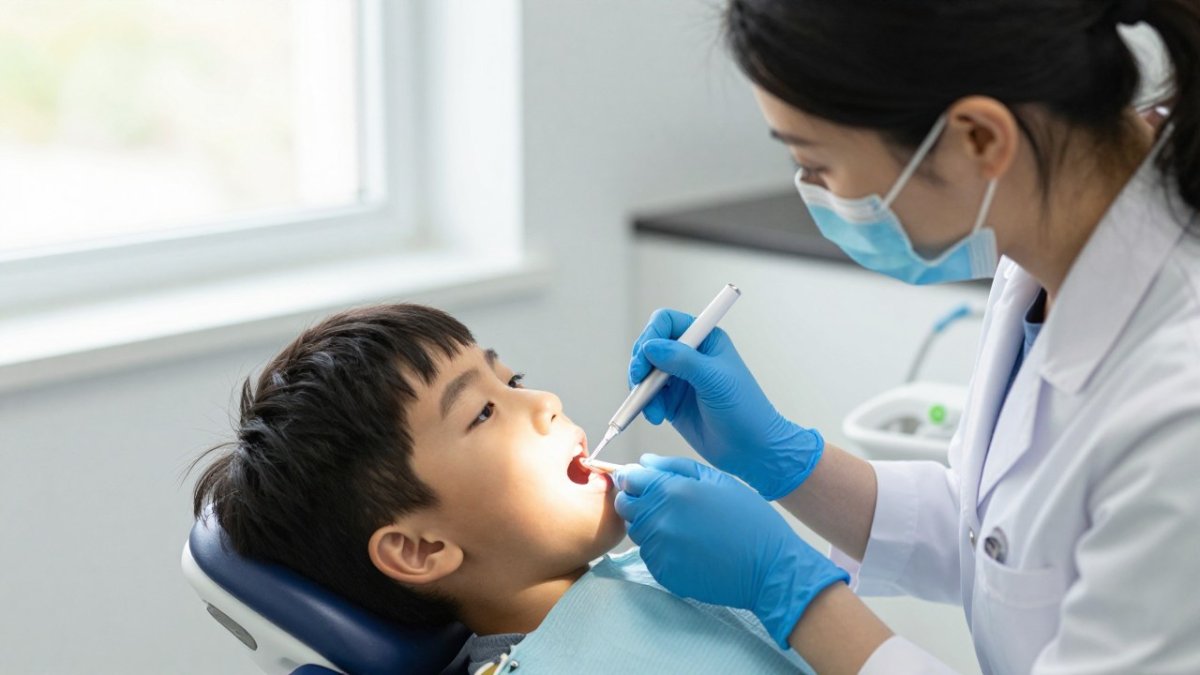
Here is the step-by-step process:
- The dentist examines the tooth and cleans the surface
- The tooth is dried and kept dry with a small barrier
- An etching gel roughens the enamel so the resin can bond
- The tooth is rinsed and dried again
- The sealant is painted into the pits and fissures
- A curing light hardens the coating in seconds
- The dentist checks the bite and adjusts if needed
The appointment follows a short, noninvasive sequence of steps.
| Step | What happens |
|---|---|
| 1 | Dentist examines the tooth and cleans the surface |
| 2 | Tooth is dried and kept dry with a small barrier |
| 3 | Etching gel roughens the enamel so resin can bond |
| 4 | Tooth is rinsed and dried again |
| 5 | Sealant is painted into the pits and fissures |
| 6 | A curing light hardens the coating in seconds |
| 7 | Dentist checks the bite and adjusts if needed |
Which Children Benefit Most and When to Consider Sealants
Sealants help most children, but timing and individual risk matter.
Children who benefit most include those with:
- Deep pits and fissures in their molars
- A history of cavities or a high risk of tooth decay
- Difficulty brushing back teeth thoroughly
- Special health care needs that make home care harder
Understanding what causes cavities in baby teeth can help you judge your child's risk. If you are unsure when to start dental visits, our guide on what age a child should start seeing a dentist covers the timeline. Sealants are one part of preventive dentistry, alongside fluoride and regular cleanings.
Request a Sealant Consultation at Franklin Dental Center
Deciding on sealants is easier with a dentist who examines your child's teeth and explains the options in plain language. At Franklin Dental Center, we focus on patient comfort and long-term oral health, and we accept a variety of insurance plans, including Medicaid and CHIP for kids.
If cost is on your mind, our guide on whether dental insurance covers kids' cleanings explains what preventive care often includes. Ready to book? Follow our steps to schedule your child's pediatric dental exam and get started.
Your child's smile deserves protection that fits their needs, not a one-size-fits-all answer. Franklin Dental Center offers gentle, personalized care, a team that works to reduce dental anxiety, and efficient appointments that handle multiple treatments in one visit. Get started with Franklin Dental Center and give your child a calmer, healthier path to strong teeth.
Frequently Asked Questions
Are dental sealants toxic to children?
Dental sealants are not considered toxic. The resin used contains very small amounts of BPA that may leach in trace quantities during application, but studies show exposure is far below levels that health organizations consider concerning. The American Dental Association and the American Academy of Pediatric Dentistry both support sealants as a safe, effective way to prevent cavities in children. If you have specific health concerns, talk with your child's dentist about the materials used and whether sealants fit your child's needs.
What are the disadvantages of dental sealants for kids?
Sealants are not right for every child. Disadvantages include the possibility of the sealant wearing down or chipping over time, which means it needs monitoring and occasional reapplication. A sealant can also trap bacteria if it is placed over an existing cavity that was not detected first, which is why a dental examination and cleaning come before application. Some parents also weigh cost and insurance coverage. For most children at higher cavity risk, the cavity-prevention benefits outweigh these drawbacks.
How long does it take to apply sealants to a child's teeth?
Applying sealant to a single tooth usually takes just a few minutes, and a full set on the back molars can often be completed in one short visit. The process is noninvasive: the tooth is cleaned, dried, etched, rinsed, and then the sealant is painted on and hardened with a curing light. No drilling or numbing is needed. Many children tolerate it well, which makes it a good option for kids who are anxious about dental visits.
Do dentists still recommend sealants for children?
Yes. Sealants remain a standard part of preventive dentistry for children. The American Dental Association and the American Academy of Pediatric Dentistry recommend them for school-age children, especially on permanent molars with deep pits and fissures where toothbrush bristles cannot reach. Sealants are typically applied soon after molars erupt, and dentists monitor them at follow-up visits to check durability and reapply if needed. Ask your child's dentist whether sealants fit their individual cavity risk.