 How-to
What Age Should a Child Start Seeing a Dentist? A Parent's Guide
Table of Contents
- The First-Visit Rule: What Age Should a Child Start Seeing a Dentist?
- When Should a Baby First Go to the Dentist If There Are No Teeth Yet?
- What to Expect at a Pediatric Dental Visit
- How to Prepare a Child for the Dentist
- How Often Should a Child Go to the Dentist?
- Special Circumstances and Earlier Appointments
- Request an Appointment at Franklin Dental Center
- Frequently Asked Questions
Last Updated: October 26, 2026
The First-Visit Rule: What Age Should a Child Start Seeing a Dentist?
Most parents assume they can wait until their child has a mouth full of teeth. The answer to what age should a child start seeing a dentist is simple: by the first birthday, or within six months of the first tooth appearing, whichever comes first (AAPD).
That guidance surprises a lot of families. At Franklin Dental Center, we hear the same question from parents in Tyler and the surrounding towns nearly every week. The short answer is one year.
The First Tooth and First Birthday Timing Rule
Two milestones decide the timing. The first tooth usually breaks through between 6 and 12 months. The first birthday marks the outer limit.
Whichever arrives first sets the clock. If a baby gets a tooth at 7 months, the first dental visit should happen by 13 months.
For a full look at when each tooth tends to arrive, this baby teeth timeline walks through the schedule month by month.
Why Early Dental Visits Matter
Early visits are not really about fixing problems. They are about preventing them.
- Cavities can start as soon as the first tooth appears.
- Parents get hands-on coaching on brushing, fluoride, and feeding habits.
- Small issues get caught before they turn into big ones.
That last point matters more than most parents expect. A child who meets a dentist at age one tends to walk into future appointments without fear.
When Should a Baby First Go to the Dentist If There Are No Teeth Yet?
A baby with no teeth still needs a dental visit by the first birthday. The appointment focuses on the gums, the jaw, feeding habits, and a risk assessment for early childhood caries.
The confusion is understandable. The recommendation is often stated as "first tooth or first birthday, whichever comes first." Parents read that and assume the tooth is the trigger. It is not.
What to Do When Your Child Has No Teeth by the First Birthday
Late tooth eruption is often normal, but it deserves a look. Bring your child in for the first birthday visit as planned.
Here is what we check at that appointment:
- Gum health and any signs of irritation
- Jaw and palate development
- Feeding habits, including bottle use and sugary drinks
Most of the time, the answer is simply patience. Some children are just late bloomers. But a professional oral examination removes the guesswork.
A common pattern is that a first tooth appears between 6 and 12 months. If nothing has broken through by the first birthday, most practitioners still start with a visual exam and a conversation rather than imaging. X-rays are generally reserved for specific concerns, not for a routine late-eruption check.
Clear Guidance for Children Who Have Not Had a Visit by Age One
Life gets busy. If your child is past the first birthday and has never seen a dentist, do not panic. Book the appointment now.
The first visit at age two or three still delivers real value. The dentist can check for tooth decay, coach you on oral hygiene, and set up a schedule of regular dental visits going forward. The goal is a dental home, not a perfect record.
Here is a practical catch-up plan:
- Book the next available routine appointment. Do not wait for a problem to appear. A checkup is cheaper and simpler than a repair.
- Bring what you know. Note any white or brown spots, gum bleeding, nighttime bottle or sippy-cup habits, and any family history of early cavities.
- Ask for a risk assessment, not just a cleaning. The dentist should tell you how often your child needs visits based on cavity risk.
- Set the next appointment before you leave. A dental home only works if the follow-up is on the calendar.
- Ask about coverage and cost up front. Confirm what your plan covers for children's cleanings and exams, and ask what a visit costs if you are paying out of pocket.
Call our office and tell us your child's age. We will find a time that works and walk you through what to expect.
What to Expect at a Pediatric Dental Visit
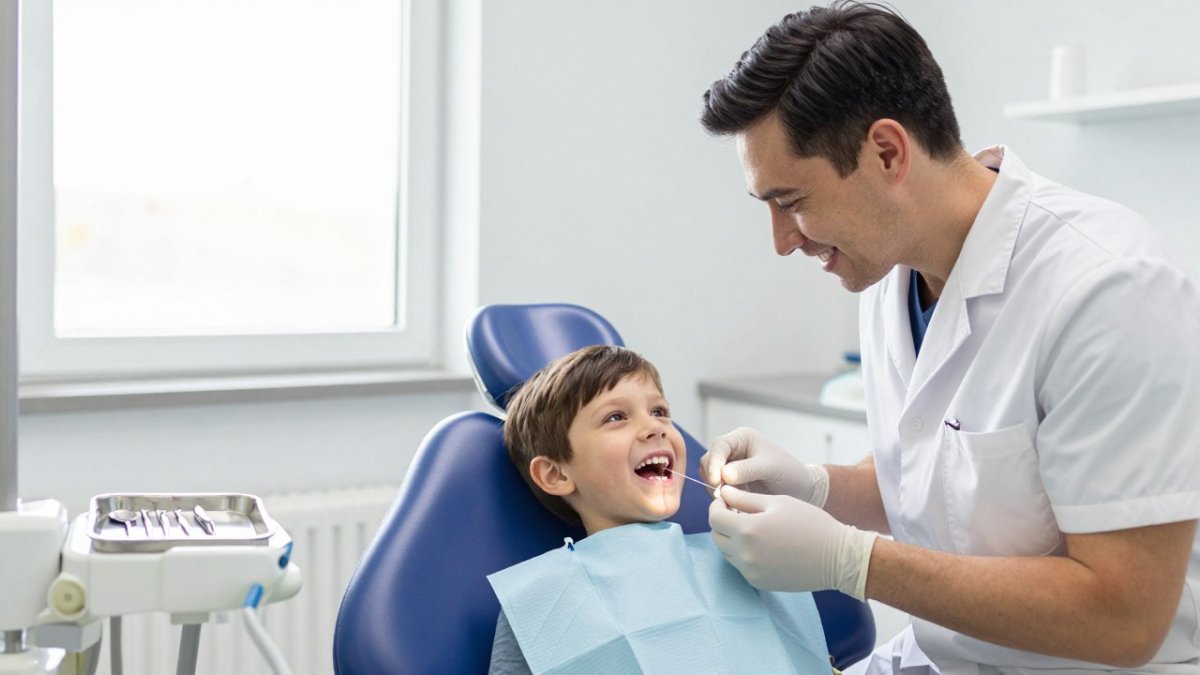
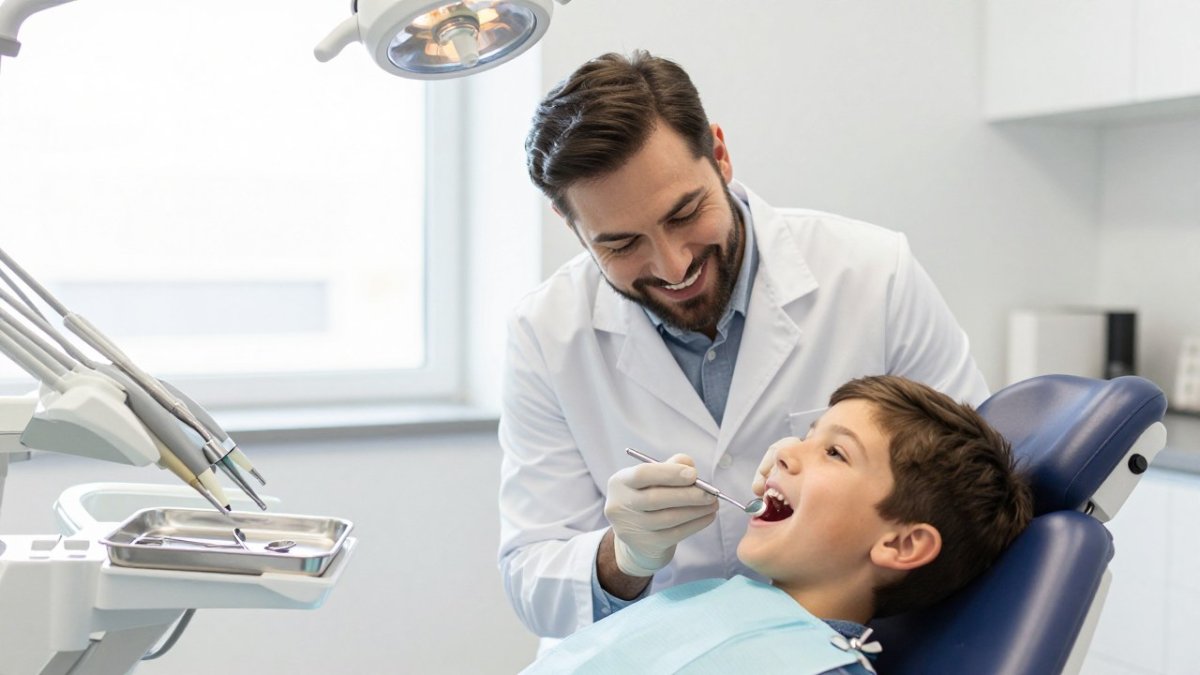
A first visit is short and gentle, usually 30 to 45 minutes. It is a well-baby dental appointment, not a full treatment session. The dentist examines, counts teeth, checks the gums, and talks with you about preventive care.
Expect these steps:
- A friendly welcome and a few questions about your child's health and habits
- A lap exam, where your child sits on your lap while the dentist checks the mouth
- A gentle cleaning if teeth are present
- A fluoride varnish if your child is at risk for cavities
- A conversation about brushing, feeding, and what comes next
Many pediatric offices let the child hold a mirror or a toothbrush during the exam. Small comforts go a long way.
Checking Teeth and Gums for Decay and Other Concerns
The dentist looks for early childhood caries, also called baby bottle tooth decay. This shows up most often on the upper front teeth.
Other things we check:
- White spots that signal early decay
- Gum redness or swelling
- Crowding or bite concerns
Catching decay early often means a simple fix instead of a filling or extraction. That is the whole point of starting young.
The Role of a Pediatric Dentist
A pediatric dentist completes extra training in children's oral health and behavior. They handle anxious kids, special needs, and complex cases with more tools and experience.
For many families, a general family dentist works well for routine care. If your child has high anxiety, complex needs, or a lot of decay, a pediatric specialist may be the better fit. When you are weighing your options, these key factors in a family dentist help you compare what matters most.
How to Prepare a Child for the Dentist
Preparation starts at home, days before the appointment. Keep it simple and calm. Children pick up on a parent's nerves, so watch your own tone.

Try these steps:
- Read a picture book about a first dental visit
- Play dentist at home with a toothbrush and a small mirror
- Use plain words like "the dentist will count your teeth"
Watch out: Do not promise that nothing will hurt. If a cleaning feels strange, a broken promise damages trust fast. Say instead that the dentist is gentle and will explain each step.
How to Make the Visit Comfortable and Positive
Small touches change the whole experience. Ask the office what they offer before you book.
- A tour of the room before the exam
- Letting your child hold a mirror or a toothbrush
- A calm, quiet space away from the busy front desk
At Franklin Dental Center, Dr. Donna Franklin-Pitts is known for a calm, gentle approach. One patient, Karen H., put it this way: "Dr. Franklin-Pitts has the most calm and gentle touch of any doctor I've ever met." That kind of care matters most with a nervous child.
How Often Should a Child Go to the Dentist?
Most children should see a dentist every six months once the first tooth appears. Some children need visits every three months if they are at higher risk for cavities. The dentist sets the schedule based on your child's risk assessment.
Dental Visit Frequency Through Early Childhood
The pattern shifts as your child grows:
| Age | Visit Frequency | Main Focus |
|---|---|---|
| First tooth to age 1 | First visit by first birthday | Lap exam, parent coaching |
| Ages 1 to 3 | Every 6 months | Cavity check, fluoride varnish |
| Ages 3 to 6 | Every 6 months | Brushing habits, sealants discussion |
| Ages 6 and up | Every 6 months | Permanent teeth, orthodontic check |
Children with a history of decay, enamel problems, or frequent sugary drinks may need more frequent visits. Ask your dentist to set the right interval for your child.
Special Circumstances and Earlier Appointments
Some children need to see a dentist before the first birthday. Book an earlier appointment if you notice any of these:
- White or brown spots on a tooth
- A tooth that looks chipped or damaged from a fall
- Gum bleeding or swelling
A common mistake is waiting for a visible problem. By the time a cavity is easy to see, it has usually been growing for months.
How Soon to Book: A Simple Urgency Guide
Not every concern needs the same speed. Use this as a starting point, and call the office if you are unsure.
| What you see | How soon to call | Why |
|---|---|---|
| White or brown spots on a tooth | Within a few weeks | Early decay is easiest to stop before it reaches the inner tooth |
| Chipped or knocked tooth from a fall | Same day | A injured tooth needs a prompt exam, even if it does not look bad |
| Gum bleeding or swelling | Within a few days | Swelling can signal infection that spreads quickly in young children |
| Pain or fussiness when eating | Same day or next day | Pain usually means the problem is already active |
| Nighttime bottle or sugary drinks | Next routine visit | The habit raises cavity risk and needs a prevention plan |
| Family history of severe early cavities | First birthday visit | Risk assessment can start earlier than the standard schedule |
Dental Visit Access, Insurance, and Cost
Cost worries stop a lot of parents from booking. This guide on whether dental insurance covers kids' cleanings answers that question directly.
If you do not have dental insurance, ask what a checkup will cost before you schedule. Our article on dental checkup costs without insurance breaks down what to expect.
We accept a variety of insurance plans, including Medicaid and CHIP for kids. Flexible payment options are available for families who need them.
A few practical steps help avoid surprises:
- Confirm whether the visit is billed as a routine exam or a problem-focused visit.
- Ask what is included in a first visit, such as the exam, cleaning, and fluoride varnish.
- Ask whether X-rays are included or billed separately.
When a Specialist Makes Sense
Most first visits can be handled by a general or family dentist. A pediatric dentist is worth considering earlier if your child has high anxiety, complex medical needs, developmental concerns, or a lot of decay.
If you are unsure which setting fits, call and describe what you are seeing. The office can tell you whether to book a routine visit or a problem-focused appointment, and how soon to come in.
Request an Appointment at Franklin Dental Center
The first visit sets the tone for a lifetime of oral health. Book it early, keep it calm, and treat it as routine care rather than a scary event.
Our team serves families across Tyler, Lindale, and Whitehouse. If you are ready to schedule, this step-by-step guide to booking a routine checkup shows exactly how to get started.
Get started with Franklin Dental Center and give your child a calm, positive first dental experience.
Frequently Asked Questions
What is the 7-4 rule for a child's first dental visit?
The 7-4 rule is a memory aid some dental offices use to reinforce the timing guidance from the American Academy of Pediatric Dentistry: schedule the first visit within six months of the first tooth appearing, and no later than the first birthday. It is not a separate clinical standard, just a shorthand for the two triggers that decide when a child should start seeing a dentist. If your baby gets a tooth at four months, that puts the visit around ten months; if the first tooth arrives at nine months, the first birthday becomes the deadline.
Should I take my child to the dentist before all their baby teeth come in?
Yes. The first appointment is not about having a full set of primary teeth. It is a well-baby dental appointment focused on checking the teeth and gums that are present, reviewing feeding habits and bottle feeding routines, and giving parents guidance on toothbrushing, fluoride toothpaste, and cavity prevention. Waiting until all baby teeth erupt, which can take until age two or three, means missing the window when early childhood caries and bedtime bottle habits are easiest to prevent.
How often should a child go to the dentist after the first visit?
Most children see a dentist every six months for a checkup and cleaning, which matches the dental visit frequency recommended by the American Academy of Pediatric Dentistry. Children with a higher risk of tooth decay, enamel problems, or a history of cavities may need more frequent visits, sometimes every three months. Your dentist will set a recall schedule after the first examination and adjust it as your child grows.
What if my child is afraid of the dentist?
Dental anxiety in children is common and manageable. Tell the office before the appointment so the team can schedule extra time and explain each step in simple words. Keep your own language positive at home, avoid words like pain or shot, and read a picture book about dental visits in the days beforehand. A pediatric dentist or a family practice experienced with anxious children will often start with a look-only visit, letting your child sit in the chair and touch the equipment before any examination begins.
A child's first dental visit does not have to be stressful. Whether your child is one or five, we will meet them where they are and build a plan that fits your family. Call us to request an appointment and get a clear answer on timing, coverage, and next steps.