 Ultimate guide
What to Look for in a Family Dentist: 7 Key Factors
Table of Contents
- 1. Credentials, Training, and Real Clinical Experience
- 2. Services That Cover Every Stage of Family Life
- 3. Questions to Ask a Dentist Before Your First Visit
- 4. Your First Dental Appointment Checklist
- 5. Choosing a Family Dentist for Children
- 6. Reading Family Dentist Reviews Without Getting Fooled
- 7. Cost, Insurance, and Payment Options to Confirm Upfront
- Conclusion: Making the Final Call
- Frequently Asked Questions
Last Updated: October 14, 2026
1. Credentials, Training, and Real Clinical Experience
Choosing the right family dentist starts with verifying credentials, and the first thing to confirm is that the dentist holds a current license to practice in your state. According to the American Dental Association's guidance on dental licensure, every practicing dentist must complete an accredited dental school program and pass national and state board examinations before treating patients. At Franklin Dental Center, we know families want more than a license number; they want a clinician with genuine experience across age groups, from toddlers to grandparents.
What to Verify Before You Book
- Active state dental license (check your state dental board's public lookup)
- Graduation from a dental school accredited by the Commission on Dental Accreditation
- Board certification or membership in a professional dental association
Dr. Donna Franklin-Pitts leads our team with the long-term clinical experience that matters when your child needs a first filling or your parent needs a crown. Ask directly: how many years have you treated children, adults, and seniors? The answer tells you more than any website bio.
2. Services That Cover Every Stage of Family Life
A family dentist should handle routine checkups, cleanings, fillings, and crowns for every age in your household, so you aren't driving to three different offices. General dentistry covers exams, cleanings, decay treatment, and gum disease management, while restorative care like fillings, crowns, bridges, and extractions comes up for almost every family.
The practical test: can this office treat a six-year-old's cavity, a teenager's cleaning, and a parent's crown without referring you out? When preventive through restorative care sits under one roof, you save time and your dental history stays in one place.
3. Questions to Ask a Dentist Before Your First Visit
A question list only helps if you know what a good answer sounds like. Use the table below as a working script, ask the question, then listen for the signal that separates a well-run practice from one that will frustrate you later.
| Ask This | What a Strong Answer Includes | Warning Sign |
|---|---|---|
| "Which insurance plans are you in network with, and will you verify my benefits before treatment?" | Specific plan names, a written pre-treatment estimate, and a staff member whose job is benefits verification | "We accept most insurance" with no offer to check your specific plan |
| "How do you handle anxious patients?" | Named comfort options, nitrous oxide, oral sedation, longer appointment blocks, a stop signal you can use mid-treatment | "Everyone's a little nervous" with no concrete protocol |
| "Can you treat my children here, or do you refer pediatric cases out?" | A clear age range they treat and a named referral partner for cases beyond it | Vague "we see kids" with no answer about very young or special-needs children |
| "When a patient needs several treatments, how do you sequence them?" | A phased plan that prioritizes urgent and stabilizing care first, with a written treatment plan | Pressure to schedule everything immediately |
| "How do you decide between a filling, a crown, or an extraction?" | A diagnostic rationale tied to remaining tooth structure and X-ray findings | A one-size answer, or a recommendation made before the exam |
| "What are my options if I don't have insurance?" | An in-house membership or discount plan, third-party financing, and a stated payment schedule | Cash-only with no estimate until after treatment |
| "How do you keep current with technology and continuing education?" | Specific equipment (digital X-rays, intraoral cameras) and named CE sources | "We stay up to date" with nothing behind it |
| "What happens if I have a dental emergency after hours?" | A recorded message with a call-back number or an on-call arrangement | A voicemail box that no one monitors |
Read the Answers, Not Just the Questions
Three patterns tell you more than any single answer. First, does the person answering say "I don't know, let me find out" and then actually follow up? A practice that closes the loop on a question will close the loop on your treatment. Second, does the answer come with a written document, a treatment plan, an estimate, a financial policy?
The First-Visit Evaluation Checklist
Treat the first visit as an inspection. These are observable, not impressionistic:
- Are you asked for a full medical and medication history before any treatment?
- Are X-rays taken only after a clinical exam, and are they digital (lower radiation, instantly viewable)?
- Does the dentist show you your own images on a screen and point to what they see?
A practice that passes most of these is doing the unglamorous work that keeps patients safe and informed. One that fails several is telling you something, however nice the lobby looks.
4. Your First Dental Appointment Checklist
Your first dental appointment is mostly about information gathering: a dental history review, a full examination, and likely X-rays so the dentist can see below the surface.
What to Bring and What to Expect
- Insurance card and photo ID
- List of current medications and allergies
- Names of any specialists you see
The visit itself usually includes a professional cleaning, a gum health check, and a conversation about any treatment options. According to the CDC's oral health guidance, routine checkups and cleanings are central to catching tooth decay and gum disease early, when treatment is simpler. If you're a new resident searching for comprehensive dental care, this first visit is also your chance to judge the office environment: is it clean, organized, and calm?
5. Choosing a Family Dentist for Children
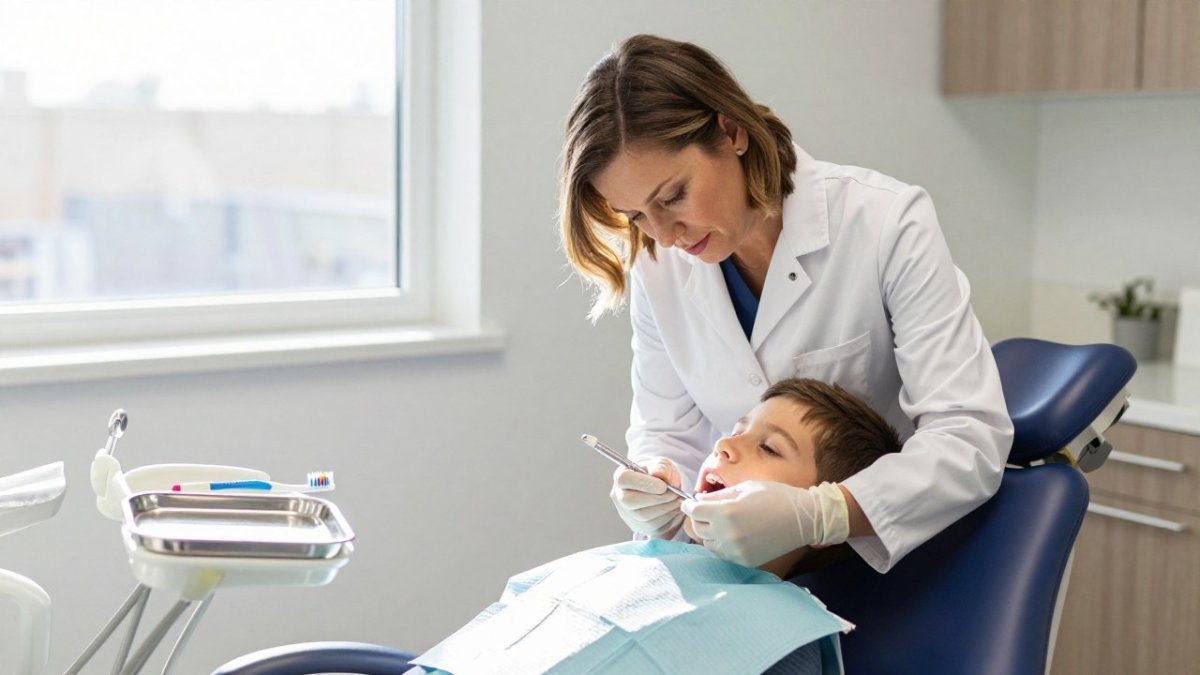
Children need a dentist who can make them feel safe, a skill separate from clinical training. A good experience starts with a hygienist or dentist who explains each tool before using it and lets the child set the pace.

Age-Specific Care and Transitions
Dental needs shift as kids grow. Early visits focus on habit-building and cavity prevention; later visits may address orthodontic questions and wisdom teeth. Ask how the practice handles these transitions so your child isn't bounced between providers. At Franklin Dental Center, our calm, gentle approach is something families notice, and our experienced team with long-term staff retention means the same faces greet your kids year after year.
6. Reading Family Dentist Reviews Without Getting Fooled
Reviews are marketing as much as evidence, so the skill is separating signal from noise, and checking the claims behind them.
How to Read Reviews Like a Skeptic
- Weight patterns over incidents. One bad review can be a bad day. The same complaint across multiple reviewers over months is a pattern.
- Read the middle ratings. Five-star and one-star reviews are the most likely to be gamed or emotionally charged. Three- and four-star reviews tend to describe specifics.
- Look for operational detail. "They called two days later to check on my extraction" tells you about follow-through. "Great dentist!" tells you nothing.
Verify the Claims Independently
Reviews describe experience; they don't confirm credentials. Verify those yourself:
- License status. Every state dental board maintains a public license lookup. Search the dentist's name and confirm the license is active and in good standing, with no disciplinary actions.
- Accreditation. Confirm the dental school is accredited by the Commission on Dental Accreditation (CODA), the recognized accrediting body for dental education programs.
- Specialty claims. A dentist advertising as a specialist (orthodontist, pediatric dentist, periodontist) should hold the corresponding certification from a recognized specialty board. General dentists can legally perform many of the same procedures, but the credential differs from the claim.
A Weighted Comparison Worksheet
When choosing between two or three practices, a gut feeling won't survive a side-by-side. Score each candidate from 1 to 5 on the criteria that matter to your family, then weight them.
| Criterion | Weight (1-5) | Practice A | Practice B | Practice C |
|---|---|---|---|---|
| Credentials verified (license, accreditation, board status) | ||||
| Treats every age in your household | ||||
| Services you actually need (preventive, restorative, emergency) | ||||
| Insurance in network and cost transparency | ||||
| Location, hours, and emergency access | ||||
| Communication style and willingness to explain | ||||
| Accessibility and accommodations | ||||
| Recent, detailed reviews and reputation | ||||
| Weighted total |
Multiply each score by its weight, add the columns, and compare totals. The exercise forces you to name what you actually value instead of defaulting to whoever answered the phone first.
7. Cost, Insurance, and Payment Options to Confirm Upfront
Cost is where transparency separates good practices from frustrating ones, so confirm insurance and payment details before your first visit. Ask which plans the office accepts, whether it handles claims for you, and your estimated out-of-pocket cost for routine and restorative work.
If you don't have dental insurance, ask about payment options and any flexible financing the practice offers. The U.S. Department of Health and Human Services' information on children's dental coverage explains how programs like Medicaid and CHIP help cover dental care for eligible kids.
| What to Confirm | Why It Matters | Ask Before Booking |
|---|---|---|
| Insurance acceptance | Avoid surprise out-of-pocket bills | Which plans are in network? |
| Payment options | Keeps treatment affordable | Do you offer financing? |
| Cost estimate | Lets you plan ahead | What will this visit cost? |
| Emergency availability | Matters when pain strikes | How do I reach you after hours? |
Conclusion: Making the Final Call
Finding the right dentist comes down to fit: credentials you can verify, services that cover your whole family, honest answers, and costs with no surprises. If you're weighing a switch or new to the area, Franklin Dental Center offers comprehensive care for every age, a gentle patient-centered approach for anxious patients, and efficient appointments that handle multiple treatments at once.
Frequently Asked Questions
What should I look for when choosing a family dentist?
Start with credentials: check that the dentist is licensed in your state and completed an accredited dental school program. Then look at the range of services offered, from preventive care like cleanings and exams to restorative work such as fillings and crowns. Confirm office hours fit your schedule, verify which insurance plans are accepted, and read patient reviews for patterns about comfort and communication. A practical first-visit checklist helps you compare candidates side by side.
What questions should I ask a family dentist before booking?
Ask whether the dentist treats both children and adults, how emergency dental care is handled after hours, and which insurance plans and payment options are available. You can also ask about their approach to anxious patients, whether they offer sedation options, and how they decide when a specialist referral is needed. Finally, ask for a clear explanation of costs before treatment begins so there are no surprises on your bill.
Can one dentist treat my whole family, including young children?
Many family dentists treat patients of all ages, from toddlers through grandparents. A family dentist for children typically offers routine checkups, cleanings, fluoride treatments, and sealants, while also handling adult needs like fillings, crowns, and cosmetic dentistry. Seeing one provider for everyone keeps dental records together and makes scheduling simpler. Confirm the office has experience with young children and anxious patients before you commit.
How do I verify a dentist's credentials and experience?
Check your state dental board's license lookup to confirm the dentist is in good standing. Look for board certification, which means the dentist completed additional training and passed a rigorous exam beyond dental school. Ask about continuing education in areas that matter to your family, such as pediatric care or sedation dentistry. You can also ask how many years they have been in practice and whether they have experience treating patients across different age groups.
What should I do before my first dental appointment?
Gather your dental history, including past treatments, current medications, and any insurance information. Write down questions you want answered so you do not forget them during the visit. Arrive a few minutes early to complete paperwork and get comfortable with the office. If you have dental anxiety, tell the staff when you schedule so they can plan extra time and explain each step before it happens.
How often should my family visit the dentist?
Most dentists recommend a checkup and professional cleaning every six months for adults and children. Your dentist may suggest more frequent visits if you have gum disease, a history of cavities, or other conditions that need closer monitoring. Children often benefit from early and regular visits to build comfort with the office. Ask your dentist what schedule makes sense for each family member based on their oral health.
What if I do not have dental insurance?
Many dental offices offer payment plans, membership programs, or discounted rates for uninsured patients. Ask upfront what a routine visit includes and what it costs so you can plan. Some practices accept Medicaid or CHIP for children, which can reduce out-of-pocket expenses significantly. Always request a written treatment estimate before agreeing to any procedure so you know the full cost in advance.
How do I know if a dental office is a good fit for my anxious child?
Look for reviews that specifically mention children and comfort. Ask whether the office offers tell-show-do techniques, where the dentist explains each tool before using it, or sedation options for more fearful kids. Visit the office beforehand if possible so your child can see the space without pressure. A staff that welcomes questions and lets your child set the pace is usually a good sign.