 How-to
When Do Baby Teeth Come In: A Complete Timeline
Table of Contents
- When Do Baby Teeth Come In: The First Year and Beyond
- Baby Teeth Eruption Chart: A Month-by-Month Guide
- The Order Baby Teeth Come In: What to Expect
- Baby Teething Symptoms: How to Recognize Them
- Teething Remedies for Babies: Safe Soothing Methods
- Normal Variation and When to Contact Your Dentist
- Preparing for Your Baby's First Dental Visit
- Frequently Asked Questions
Last Updated: October 19, 2026
When Do Baby Teeth Come In: The First Year and Beyond
When do baby teeth come in? Most babies get their first tooth between 4 and 12 months old, though timing varies widely.
Baby teeth typically begin erupting around six months, but some start as early as three months and others wait until after their first birthday.
Understanding when baby teeth come in helps you recognize normal development and know when to call your pediatrician or dentist.
Baby Teeth Eruption Chart: A Month-by-Month Guide
The eruption timeline unfolds over about two and a half years. By age three, most children have all 20 primary teeth, though some take longer.
Here's what to expect:
| Age Range | Teeth Coming In | Number of Teeth |
|---|---|---|
| 4-12 months | Lower and upper central incisors | 4 |
| 8-14 months | Upper lateral incisors | 2 |
| 7-12 months | Lower lateral incisors | 2 |
| 12-19 months | Upper first molars | 2 |
| 12-20 months | Lower first molars | 2 |
| 16-23 months | Upper canines | 2 |
| 17-24 months | Lower canines | 2 |
| 20-33 months | Upper second molars | 2 |
| 20-31 months | Lower second molars | 2 |
The exact order can vary slightly. Some children get molars before canines; what matters most is steady progress toward a full set of primary teeth.
The Order Baby Teeth Come In: What to Expect
Baby teeth erupt in a generally predictable sequence, though individual variation is normal. Knowing the pattern helps you anticipate what's next and spot when something seems off.
Lower Central Incisors
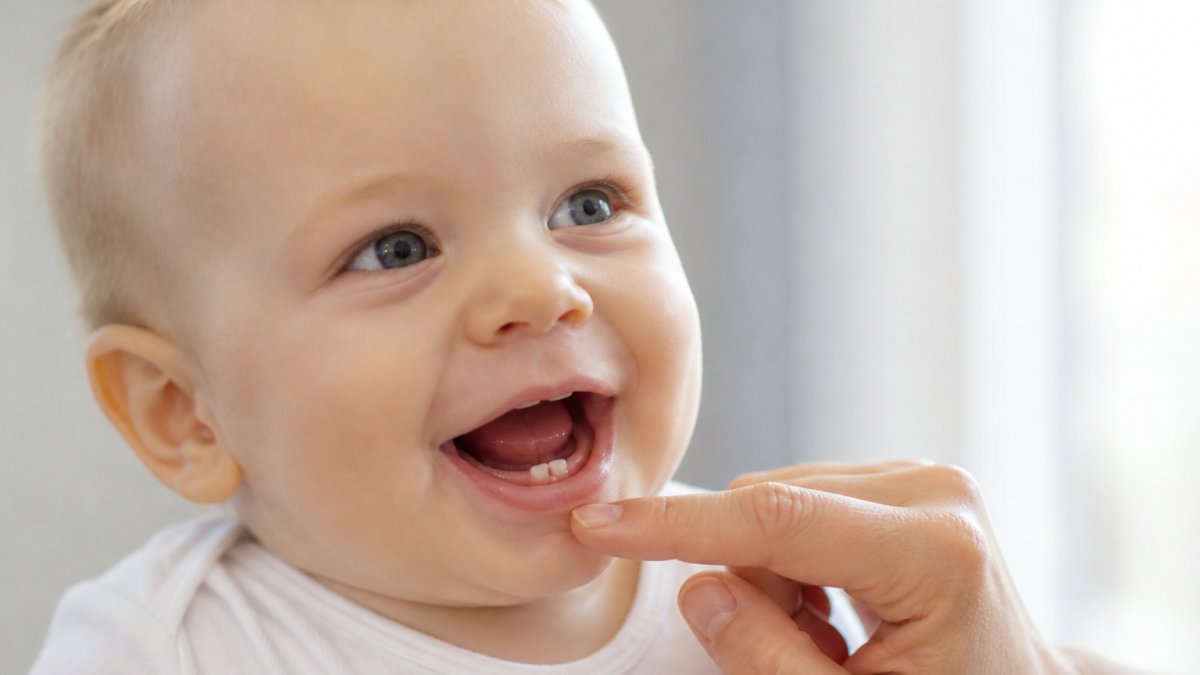
The lower central incisors are usually the first baby teeth to come in, typically between four and eight months old, though some babies wait until ten or twelve months.
These small, thin teeth help your baby begin eating solid foods and lay the foundation for bite and speech development.
Upper Central Incisors
The upper central incisors typically follow within a few weeks or months, usually erupting between six and twelve months old.
Once both sets are in place, your baby has four front teeth, a milestone that shifts how they handle food and toys.
Lateral Incisors, Canines, and Molars
The lateral incisors come next, beside the central incisors on both jaws, typically appearing between seven and fourteen months.
The canines (pointed teeth) usually erupt between 16 and 24 months and help tear food.
The first molars typically appear between 12 and 20 months and are crucial for chewing. The second molars, the last primary teeth to come in, usually erupt between 20 and 33 months.
Baby Teething Symptoms: How to Recognize Them
Teething can produce real discomfort, but the evidence for what it does and does not cause is narrower than many parents expect. A useful rule of thumb: teething is a local gum event, so symptoms should be explainable by sore, swollen gums.
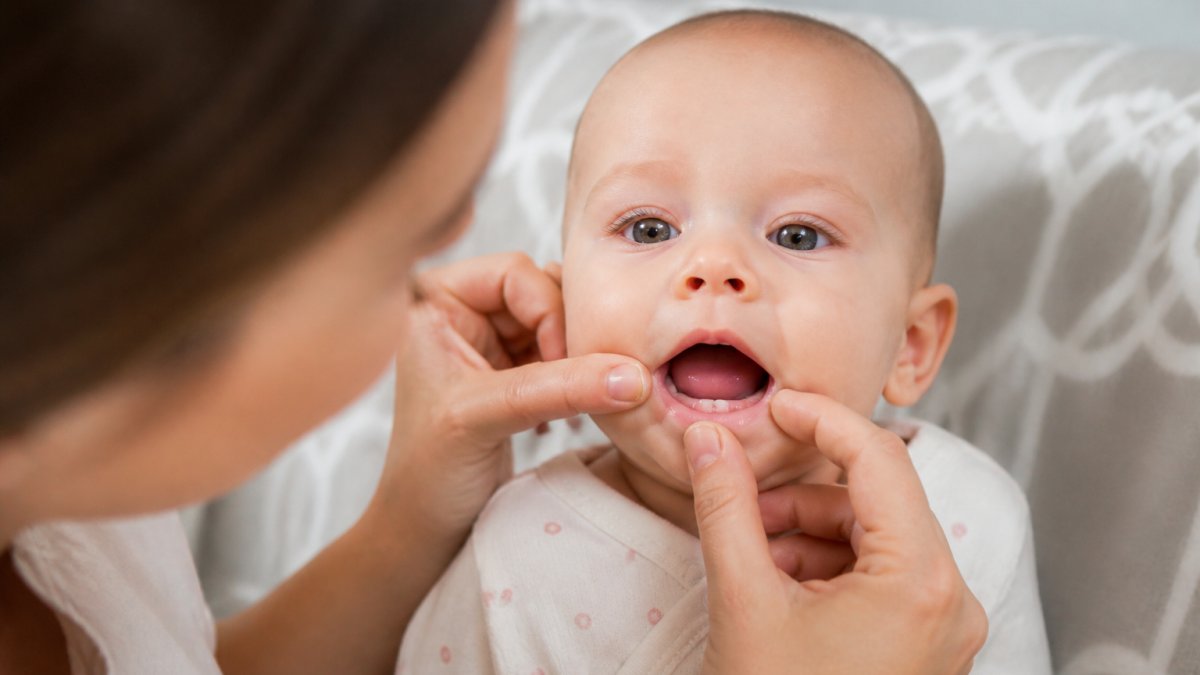
Symptoms commonly linked to teething
These signs track with a tooth pushing through gum tissue:
- Swollen, tender gums. The gum over an erupting tooth looks redder and feels firmer or slightly boggy compared with adjacent gum tissue.
- Increased drooling. Eruption stimulates saliva production; drool can irritate the chin, neck, and chest, producing a contact rash.
- Chewing and gnawing. Counter-pressure on the gums feels good, so babies chew fingers, toys, crib rails, and caregivers' knuckles.
- Fussiness and disrupted sleep. Discomfort tends to peak in the days right before a tooth breaks through and ease once it emerges.
- Pulling at ears or rubbing cheeks. This is referred pain: the same nerve branches that supply the gums also supply parts of the face and ear canal, so gum discomfort can be felt elsewhere.
Symptoms that should NOT be blamed on teething
These are not caused by teething and should prompt a call to your pediatrician:
- Fever of 100.4°F (38°C) or higher. Teething does not cause true fever. A fever in an infant, especially under 3 months, is a medical issue that needs evaluation.
- Vomiting or significant diarrhea. These suggest a gastrointestinal illness or other cause, not eruption.
- Rash beyond the drool area. Drool rash is confined to skin that saliva touches (chin, cheeks, neck, chest). A widespread body rash is not teething.
- Congestion, cough, or runny nose. These are respiratory symptoms, not dental ones.
- Refusal to feed or signs of dehydration. A baby who stops drinking or has fewer wet diapers needs prompt attention.
- Severe or inconsolable crying, lethargy, or unusual irritability. These are red flags for illness or injury.
A practical rule: if a symptom could be explained by sore gums alone, teething is a reasonable suspect. If it involves the whole body, fever, GI upset, respiratory signs, look for another cause.
Why the confusion happens
Teething and common infant illnesses overlap in time. Babies typically cut teeth between 6 and 24 months, which is also when they're exposed to more viruses, start solid foods, and put everything in their mouths. A fever during a teething week is usually a coincidence, not a consequence, which is why many parents, and even some older child-care advice, attribute illness to teething.
When to call
Call your pediatrician if your baby has a fever of 100.4°F (38°C) or higher, vomiting, significant diarrhea, signs of dehydration, a rash beyond the drool zone, or crying you cannot soothe. For teething discomfort alone, the safe-soothing methods in the next section are usually enough.
Teething Remedies for Babies: Safe Soothing Methods
Several safe, evidence-based approaches help soothe teething discomfort for most babies.
Cold relief is one of the most effective remedies.
Teething toys made from food-grade silicone or rubber are safe and helpful. Avoid toys with small parts that could become choking hazards.
Over-the-counter pain relief may be appropriate for some babies, but only under guidance from your pediatrician. Do not use topical numbing gels containing benzocaine, as the FDA has warned against their use in infants (the FDA).
Avoid these approaches:
- Amber teething necklaces or bracelets (choking hazard)
- Teething tablets or homeopathic remedies (unproven safety)
- Hard frozen objects that could crack teeth
- Medications not recommended by your pediatrician
At Franklin Dental Center, we recommend discussing teething pain relief options with your pediatrician before your baby's first dental visit.
Normal Variation and When to Contact Your Dentist
The range of normal for baby teeth is wide, and most variation needs no intervention. But "wide" is not "unlimited", knowing the practical thresholds helps you decide when to watch and when to act.
What counts as normal variation
- First tooth between 4 and 12 months. This is the commonly cited window. Some babies are early (3 months) and some are late (after 12 months) without any underlying problem.
- Full set of 20 primary teeth by about 3 years. Most children finish by age 3; a few take until 3½. Both are within the normal range.
- Slight differences in order. Lower central incisors usually come first, but a baby who gets a top tooth first, or who cuts molars before canines, is still following an acceptable pattern.
- Gaps between teeth. Primary teeth are smaller than the permanent teeth that replace them, so spacing is normal and often desirable, it leaves room for larger adult teeth.
Factors that can shift timing
Eruption timing is influenced by several factors:
- Prematurity. Babies born early often erupt their first teeth later than their chronological age would suggest. Many clinicians adjust for gestational age when judging whether eruption is on track.
- Genetics. If one or both parents were late teethers, their child is more likely to follow a similar pattern.
- Sex. On average, girls tend to erupt teeth slightly earlier than boys, though the overlap is large.
- Medical conditions. Certain genetic, endocrine, and developmental conditions can delay eruption. These are uncommon, but they are the reason a persistent delay deserves a professional look.
- Local factors. Occasionally a single tooth is delayed or blocked by gum tissue or crowding; a dentist can identify this on exam.
Practical thresholds: when to ask
Use these as conversation starters with your pediatrician or dentist, not reasons to panic:
- No teeth by 18 months. Mention it at the next well-child visit. Many clinicians will examine the gums and may refer to a pediatric dentist if nothing is emerging.
- No teeth by 18-24 months with other developmental concerns. Earlier evaluation is reasonable if your child also has feeding, growth, or developmental delays.
- Teeth coming in severely out of order, or a tooth that seems stuck. A dentist can check whether gum tissue is blocking eruption.
- Only a few teeth by age 3. A pediatric dental exam is appropriate to rule out a developmental or local cause.
- Signs of infection. Swelling with pus, a fever with gum swelling, or a discolored tooth after an injury warrants prompt care.
- Bite concerns. A noticeably misaligned bite, or crowding that seems severe, is worth flagging at a checkup, not necessarily for treatment now, but for monitoring.
What to do while you wait
If your baby is simply on the later side of normal, there is usually nothing to fix. Keep cleaning the gums and any erupted teeth, offer safe teething relief, and keep well-child visits on schedule. If you're unsure whether your child's timeline is normal, a single exam is often all it takes to settle the question.
Preparing for Your Baby's First Dental Visit
Before the appointment, talk positively about the dentist using simple, upbeat language.
Bring your baby's health history and any records from your pediatrician.
At Franklin Dental Center, Dr. Donna Franklin-Pitts and our team are experienced in working with anxious children.
Understanding when baby teeth come in helps you support your child's oral development with confidence.
When your baby's first tooth appears, it's time to think about your first dental visit.
Frequently Asked Questions
Can my baby be teething at 3 months?
While most babies begin teething between 4 and 12 months, some may show early signs as early as 3 months. Early teething is typically within normal variation. However, if your baby shows signs before 3 months or you're concerned about the timing, contact your dentist or pediatrician. They can evaluate whether what you're observing is genuine tooth eruption or another cause.
What are the first signs of baby teething?
Common early signs of baby teething include swollen, tender gums, excessive drooling, chewing on fingers or objects, and mild irritability. Some babies also experience a slight increase in temperature (not a high fever). Not all babies show all symptoms. If your baby has a high fever, diarrhea, or rash, these may indicate illness rather than teething, contact your pediatrician to rule out other causes.
How can I soothe a teething baby safely?
Safe teething remedies include offering a clean, cold (not frozen) teething ring, gently rubbing baby's gums with a clean finger, and providing age-appropriate solid foods to chew if your baby is eating solids. Avoid teething products containing benzocaine or belladonna. Always supervise your baby with any object they put in their mouth. If your baby seems in significant pain, discuss options with your pediatrician or dentist.
When should I contact a dentist about delayed baby teeth?
If your baby hasn't shown any signs of tooth eruption by 12 months, or if there are large gaps (more than 6 months) between teeth coming in, schedule a dental evaluation. Premature birth, certain medical conditions, or nutritional factors may affect eruption timing. A dentist can assess whether the delay is normal variation or warrants further investigation.