 How-to
Pediatric Dental Care for Anxious Children: A Parent's Guide
Last Updated: November 4, 2026
Quick Summary
Pediatric dental care for anxious children works best when parents treat fear as information, not defiance, and prepare a week ahead with low-key steps like reading a picture book and visiting the parking lot. During the visit, stay calm and quiet, agree on a stop signal, and let the dental team lead with tell-show-do.
- Dental anxiety in kids usually has a nameable cause, such as sound, smell, loss of control, or a bad first visit.
- Role-play at home with a kitchen chair and clean spoon rehearses the sequence before the real appointment.
- Avoid words like shot, drill, and hurt, and never promise it won't hurt at all.
- Sedation is a tool, not a default, and never give it at home without the dentist's explicit instructions.
- Debrief on the drive home and write down what helped so the next visit starts ahead.
Table of Contents
- Why Pediatric Dental Care for Anxious Children Starts With Understanding the Fear
- How to Prepare a Child for the Dentist Before the First Visit
- What to Say to a Child Who Is Afraid of the Dentist
- Ways to Calm a Child at the Dentist During the Appointment
- Sedation Dentistry for Children: When It Helps and What Parents Should Know
- Sensory-Friendly Adjustments and Post-Visit Debriefing for Anxious Kids
- Requesting a Gentle Pediatric Dental Appointment at Franklin Dental Center
- Frequently Asked Questions
Why Pediatric Dental Care for Anxious Children Starts With Understanding the Fear
Pediatric dental care for anxious children works best when parents treat fear as information, not defiance. A frightened child is telling you something specific: a sound, a smell, a memory, or a feeling of no control. Families often do best when they take time to understand the fear before the appointment.
Dental anxiety in kids is common and it is not a character flaw. It usually has a cause you can name, and once you name it, you can plan around it.
Common Causes of Dental Anxiety in Children
Most childhood dental fear traces back to a short list of triggers:
- Sound and smell. The drill whine and the latex-and-mint smell of a clinical environment.
- Loss of control. Being tipped back in a chair with hands in your mouth is vulnerable for anyone.
- Dental trauma or a bad first visit. One rough appointment can set the tone for years.
- Borrowed fear. A parent or sibling who dreads the dentist teaches that reaction without meaning to.
- Fear of the unknown. Kids who have never had a dental check-up fill the gap with imagination.
A common mistake is dismissing these as silly. They are not silly to a six-year-old, and treating them as real is the first step toward cooperation.
How Early Dental Visits Build Lifelong Oral Health Habits
Early intervention changes the trajectory. A first visit that is short, calm, and uneventful teaches a child that the dentist is boring, and boring is exactly what you want.
Preventive care started young also catches small problems before they become painful ones. Pain is a common driver of dental fear, so preventive care can help reduce that fear. If you are unsure when to begin, our guide on what age a child should start seeing a dentist walks through the timing.
How to Prepare a Child for the Dentist Before the First Visit
Preparation is where parents win or lose the appointment. Start a week out, keep it low-key, and avoid turning the visit into a big event. Children read your energy, so calm beats cheerful.
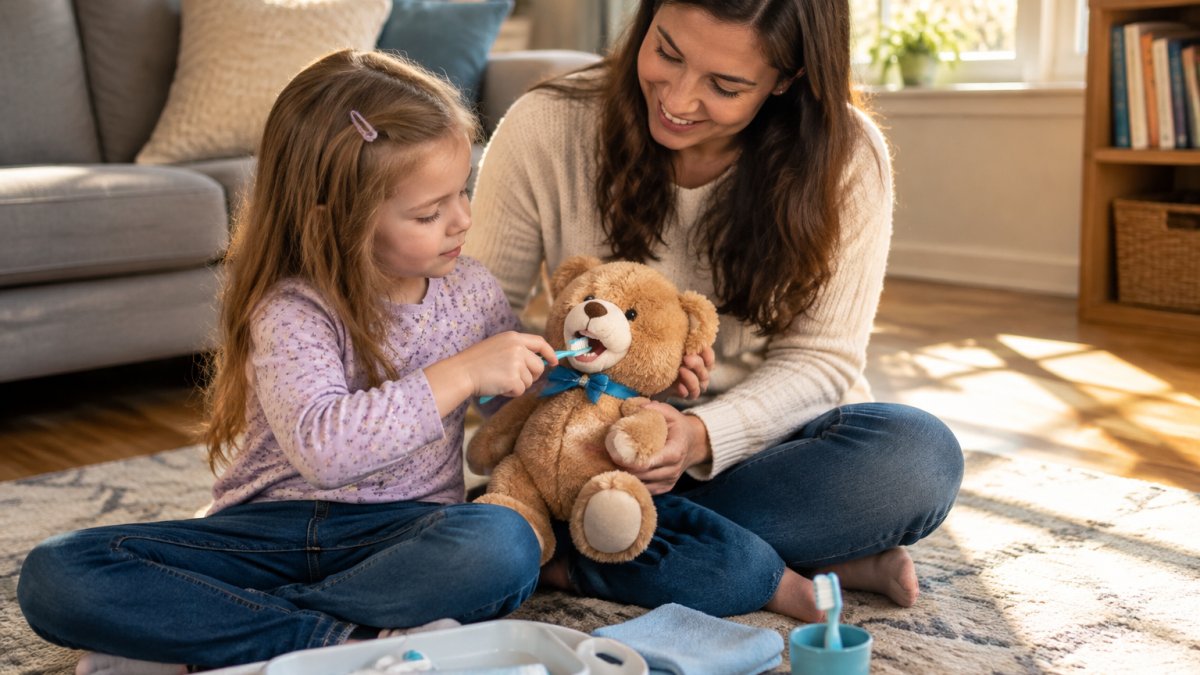
Here is a sequence many parents find helpful:
- Read a picture book about a dental check-up a few days ahead.
- Keep the language plain. Say "the dentist will count your teeth," not "you'll be fine."
- Visit the parking lot. Drive by the office so the building is familiar.
- Pick a good time. Book when your child is rested, not at nap time or after school fatigue.
- Skip the bribe. A promised toy signals that something bad is coming.
Role-Playing Dental Visits at Home
Role-play does more than any pep talk. Sit your child in a kitchen chair, count their teeth with a clean spoon, and let them be the dentist next. Swap roles, keep it playful, and stop while it is still fun. This is desensitization in its simplest form, and it works because the child rehearses the sequence before facing it for real.
What to Say to a Child Who Is Afraid of the Dentist
Words matter more than most parents expect. Use non-threatening language and short, honest sentences. Avoid "shot," "drill," and "hurt," and never promise "it won't hurt at all," because if it does, you have spent your credibility.
Try these:
- "The dentist is going to count your teeth and take a picture of them."
- "You can raise your hand if you want a break. They will stop."
- "I'll be right here in the room."
- "It's okay to feel nervous. Nervous is allowed."
Validate the feeling, then redirect to what will happen. A child who hears "you're scared and that's fine" relaxes faster than one told to be brave.
Ways to Calm a Child at the Dentist During the Appointment
The appointment itself is a team effort between parent and dental team. Your job is to stay calm and stay quiet. Answer questions briefly, let the hygienist lead, and save your own questions for the end. Children take their cues from the nearest adult, and a parent who narrates every step or apologizes in advance raises the child's alertness rather than lowering it.
A useful frame is the tell-show-do sequence used in pediatric behavior management. The dental professional tells the child what will happen in plain words, shows the instrument or motion, then does it. You can reinforce the same pattern at home so it feels familiar: tell your child the dentist will count teeth, show them with a clean spoon, then let them practice.
Positioning matters more than most parents realize. Sitting knee-to-knee with the child, holding a hand, or letting the child keep a leg or arm free can restore a sense of control. Agree on a stop signal before the appointment starts, a raised hand, a squeeze, or a word, and confirm with the hygienist that they will honor it.
Distraction Techniques and Positive Reinforcement
Distraction is a common behavior management approach in pediatric dentistry, and it often works best when matched to the child's age and sensory profile. For a younger child, a favorite song, a squeeze toy, or a story during the cleaning can hold attention. For an older child, headphones with an audiobook or music, a counting game, or a job to do (holding the mirror, choosing the toothpaste flavor) redirects focus from the procedure to a task.
Praise effort, not just cooperation: "You held still while she counted. That helped." Specific praise beats "good job" every time because it tells the child exactly what worked and gives them something to repeat. Avoid promising a reward for staying calm mid-visit; instead, acknowledge what they did after the fact.
Watch out: distraction should not be used to override a stop signal. If your child raises a hand or says stop, the team should pause. Using headphones to drown out a child's attempt to communicate erodes trust and can make the next visit harder.
If your child's fear runs deep, our guide on gentle dentistry for anxious patients explains how a calming approach is built into the visit itself.
Sedation Dentistry for Children: When It Helps and What Parents Should Know
Sedation dentistry is a tool, not a default. Dentists may consider it in some situations, such as when a child's anxiety makes care difficult or when a child needs extensive treatment. Whether it is appropriate depends on the child's health and needs and should be discussed with a qualified dental professional.
Options range from mild to deeper sedation, and the right choice depends on the child, the treatment, and a conversation with a qualified dental professional.
Ask these questions before agreeing:
- What level of sedation are you recommending, and why is it the right level for my child's treatment and anxiety?
- Who monitors my child during and after the appointment, and what monitoring equipment is used?
- What are the fasting requirements before the appointment?
- What are the risks, the recovery expectations, and the signs that warrant a call after we leave?
- What is the plan if my child does not tolerate the sedation or the procedure cannot be completed?
Watch out: sedation is not a substitute for a gentle approach. It supports good behavior management, it does not replace it. Never give a child sedation at home before an appointment without explicit instructions from the dentist, and never combine sedation with other medications without the dentist's knowledge.
Sensory-Friendly Adjustments and Post-Visit Debriefing for Anxious Kids
Two areas that can make a real difference are sensory needs and the debrief afterward. If your child is sensitive to sound, light, or touch, it can help to mention this when you book and ask what accommodations the office can offer.
Then debrief. On the drive home, ask what went well and what felt hard. Write down what helped so the next visit starts ahead. This is how pediatric dental care compounds over time: each visit teaches the next one.
| Situation | What to try | Why it helps |
|---|---|---|
| Child covers ears at the drill | Ear protection, music, or a break | Reduces sensory overload |
| Child gags easily | Shorter bursts, sit-up breaks | Builds tolerance without distress |
| Child fears the unknown | Role-play and drive-by visits | Familiarization lowers threat |
| Child had a rough past visit | Debrief and a fresh start plan | Breaks the negative loop |
| Parent feels anxious too | Stay quiet, let the team lead | Kids mirror adult calm |
Requesting a Gentle Pediatric Dental Appointment at Franklin Dental Center
A calm first visit sets the pattern for a lifetime of oral health. At Franklin Dental Center, Dr. Donna Franklin-Pitts and our team provide comprehensive, gentle care for patients of all ages in the Tyler, Texas area. For details on insurance and payment options, please contact the office directly.
Before you call, it helps to know how to schedule your child's pediatric dental exam step by step. If you are weighing a switch, our guide on finding a gentle dentist nearby covers what to look for. And if cost is on your mind, check whether dental insurance covers kids' cleanings.
One patient, Karen H., shared: "Dr. Franklin-Pitts has the most calm and gentle touch of any doctor I've ever met."
Frequently Asked Questions
How can I help my child with dentist anxiety?
Start days before the visit by talking about what will happen in simple, non-threatening language and playing dentist at home with a stuffed animal. On the day, keep your own tone calm, bring a comfort item, and let the dental team know about your child's fears in advance. Pediatric dental care works best when the office knows what to expect, so ask whether they offer sensory-friendly adjustments or extra time for anxious children.
Is sedation dentistry for children safe?
Sedation is used in pediatric dentistry when a child's anxiety or the treatment needed makes cooperation difficult. Safety depends on the type of sedation, the child's health history, and proper monitoring by the dental team. Any sedation decision should follow a consultation where the dentist reviews your child's medical history and explains the risks and monitoring involved.
What should I say to a child who is afraid of the dentist?
Use short, honest, non-threatening language. Say the dentist will count their teeth and clean them with a special toothbrush, and that you will be nearby the whole time. Avoid words like pain, shot, or drill, and avoid promising that nothing will hurt. If your child asks a question you cannot answer, tell them you will ask the dentist together. This keeps trust intact and reduces anticipatory fear.
Can dental anxiety in children improve over time?
Yes. With repeated positive visits, familiarization with the dental team, and gentle behavior management, most children gradually become more comfortable. Early intervention matters: short, low-stakes check-ups build cooperation before any treatment is needed. If anxiety stays severe, ask about desensitization visits or sedation options. A pediatric dental care plan that includes preventive care and gradual exposure gives children the best chance of outgrowing the fear.
Your child does not have to white-knuckle every dental visit. With preparation, the right words, and a team that treats fear as real, most anxious kids settle into routine care within a few visits. Franklin Dental Center offers a patient-centered approach built around comfort, preventive care, and clear communication, with flexible payment options and experienced staff who stay. Get started with Franklin Dental Center and request an appointment for your child's first gentle visit.