 how-to
Gentle Dentist for Anxious Patients: A How-To Guide
Table of Contents
- Understanding Dental Anxiety and Why a Gentle Dentist Matters
- How to Manage Dental Anxiety Before an Appointment
- What to Tell Your Dentist About Dental Anxiety
- Gentle Dentistry Techniques for Anxious Patients
- Sedation Dentistry for Dental Anxiety
- Finding and Evaluating a Gentle Dentist
- Your First Visit: What to Expect
- Frequently Asked Questions
Last Updated: October 11, 2026
Understanding Dental Anxiety and Why a Gentle Dentist Matters
Dental anxiety affects millions of people and prevents them from seeking needed care. A gentle dentist for anxious patients can change that experience completely. (Source: an estimated 9-15% of the population)
Dental fear stems from past painful visits, fear of needles, loss of control, or worry about judgment. Finding a dentist who understands these concerns makes treatment possible.
At Franklin Dental Center, we know anxiety is real and valid. Dr. Donna Franklin-Pitts and our team have built our practice around patient comfort, creating a calm, judgment-free environment where nervous patients feel heard and safe.
How to Manage Dental Anxiety Before an Appointment
Evidence-based coping strategies significantly reduce anxiety and can make sedation unnecessary for many patients. Dental anxiety affects an estimated 9-15% of the population, so you are not alone (The prevalence of dental anxiety and fear in patients referred to Isfahan Dental School...).
Non-medication coping strategies:
Breathing exercises are highly effective. Box breathing (inhale for 4 counts, hold for 4, exhale for 4, hold for 4) activates your parasympathetic nervous system and lowers heart rate. Practice daily before your appointment and use it in the waiting room and during treatment.
Gradual exposure helps desensitize fear over time. If you haven't seen a dentist in years, schedule a brief consultation or cleaning first. Familiarity with the office, sounds, and sensations reduces panic at future visits.
Sensory adjustments address specific triggers. Ask your dentist about these accommodations:
- Headphones with music or white noise to mask drill sounds
- Tinted or dark glasses to reduce bright overhead light
- A hand signal or raised hand as your pause signal (agreed before treatment starts)
- A bib or towel to reduce the sensation of water or instruments in your mouth
- Breaks every 15-20 minutes during longer procedures
Practical steps to take before your visit:
- Call the dental office and explain your anxiety; ask how they accommodate nervous patients
- Request the quietest appointment time (early morning or mid-afternoon slots typically have fewer interruptions)
- Ask whether a pre-visit tour is available
- Avoid caffeine on the day of your appointment
- Get adequate sleep the night before
- Bring a trusted support person if the office allows one
- Arrive 10-15 minutes early to acclimate to the environment
Create a pause signal with your dentist before treatment starts. This is non-negotiable for anxious patients. Agree on a hand gesture, finger tap, or sound you'll use if you need a break. Knowing you can pause, without having to speak or explain, restores a sense of control and often prevents panic from escalating.
For patients with past trauma or extreme anxiety, ask your dentist about trauma-informed care practices: explaining what they're doing before doing it, asking permission before touching you, respecting your pause signal, avoiding restraint or pressure, and acknowledging your fear as valid. If a dentist dismisses your concerns or uses pressure, find another provider.
What to Tell Your Dentist About Dental Anxiety
Communication is essential. Be specific about what makes you anxious: past dental experiences, procedures that worry you most (needles, drilling sounds, feeling trapped), your preferred communication style, and physical sensations that trigger panic. Ask your dentist about their experience with anxious patients, how many they treat and what techniques they use. A dentist who listens and adjusts their approach is worth keeping.
Gentle Dentistry Techniques for Anxious Patients
A gentle dentist for anxious patients uses techniques including: thorough numbing before anesthetic injection, smaller gauge needles, slow anesthetic injection, breaks during longer procedures, vibration devices to reduce needle sensation, step-by-step explanation, and deliberate pacing. Many offices use digital X-rays (faster, less radiation) and white noise or music to mask drill sounds, both of which significantly reduce anxiety.
Sedation Dentistry for Dental Anxiety
For severe anxiety, sedation options exist: nitrous oxide (you stay awake but relaxed), oral sedation (drowsy but responsive), IV sedation (little memory of procedure), or general anesthesia (fully asleep, reserved for extreme cases). Sedation is safe when administered by trained professionals who monitor vital signs. Ask about their training before choosing this option. Many patients find that a truly gentle dentist combined with communication and pause signals is sufficient; start with non-sedation approaches first.
Finding and Evaluating a Gentle Dentist
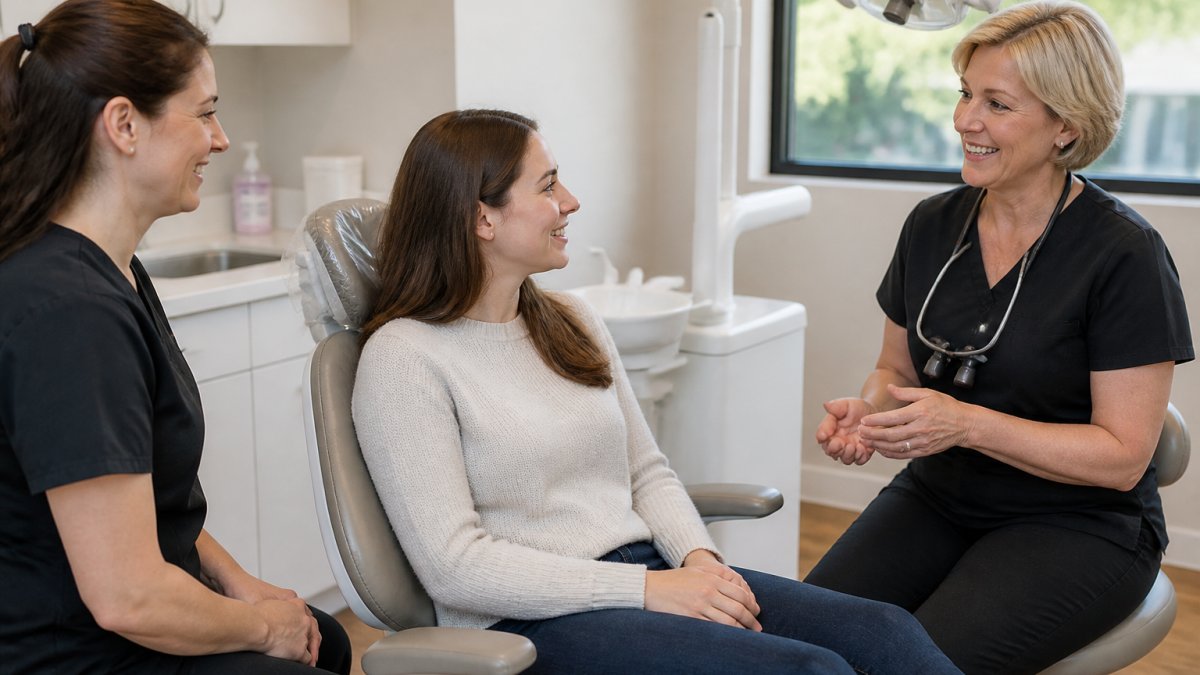
Choosing the right dentist is the most important step. A truly gentle dentist combines technical skill, patience, clear communication, and genuine experience treating anxious patients.
Step 1: Screen by phone before scheduling.
Call and ask: How many anxious patients do you treat monthly? What training do you have in anxiety management or sedation? Do you offer nitrous oxide, oral sedation, or IV sedation? How much time do you allow per appointment? What is your cancellation policy?
Step 2: Read reviews strategically.
Step 3: Visit the office in person if possible.
Notice: Is the environment clean, calm, and welcoming with soft lighting and quiet background music? Do staff greet you warmly and listen? Are there comfort items like blankets or headphones?
Step 4: Ask about sedation options and safety.
If you're considering sedation, ask:
- What type(s) of sedation do you offer?
- Who administers it, you or an anesthesiologist?
- What monitoring do you use during sedation? (Reputable practices monitor blood oxygen, heart rate, and blood pressure.)
- What are the eligibility requirements? (Some patients cannot use certain sedation due to medical conditions or medications.)
- What is the cost, and does insurance cover it?
- What is the recovery time, and will I need someone to drive me home?
- What are the risks, and how do you screen for contraindications?
Step 5: Discuss cost and insurance upfront.
Many anxious patients avoid the dentist partly because they fear surprise bills. Ask:
- What is your fee for an initial exam and X-rays?
- Do you offer a payment plan or financing options?
- Which insurance plans do you accept?
- Can you provide a written estimate before treatment begins?
- If I need sedation, what is the additional cost?
A dentist who is transparent about cost and willing to discuss payment options demonstrates respect for your concerns.
Step 6: Assess trauma-informed and neurodivergence-aware care.
If you have past dental trauma, sensory sensitivities, or neurodivergence, ask:
- Have you worked with patients who have dental trauma or PTSD?
- Do you allow patients to bring headphones or wear sunglasses during treatment?
- Can I request a quieter, private treatment room?
- Are you willing to take frequent breaks?
- Do you have experience with patients who are autistic, ADHD, or have other sensory processing differences?
A dentist who answers "yes" and explains their approach in detail is more likely to be a good fit.
Red flags that indicate you should look elsewhere:
- Staff is impatient or dismissive on the phone
- The office feels cold, clinical, or high-volume
- The dentist does not ask about your anxiety or past experiences
- They do not offer a pause signal or respect it when you use it
- They refuse to explain procedures or answer questions
- They pressure you into treatment you're not ready for
- They do not discuss cost or sedation options upfront
- They have no experience with anxious patients
Green flags that indicate a good fit:
- Staff is warm, patient, and takes time to listen
- The office is calm, clean, and welcoming
- The dentist asks detailed questions about your anxiety and past experiences
- They offer a pause signal and explain how it works
- They explain each step before doing it and ask permission
- They discuss cost, insurance, and sedation options transparently
- They have specific experience treating anxious, traumatized, or neurodivergent patients
- They allow you to bring a support person or use headphones
- They schedule adequate time per appointment
Finding the right dentist may take time, but it is worth the effort. A dentist who respects your concerns and adapts their approach to your needs transforms your experience from frightening to manageable.
Your First Visit: What to Expect
Knowing what happens at your first appointment reduces fear. Most dentists follow a similar pattern, but asking ahead helps you prepare.
Typical first visit timeline:
- Check-in and paperwork (10-15 minutes)
- Discussion of your medical history and anxiety concerns (10 minutes)
- Gentle examination of your teeth and gums (15-20 minutes)
- X-rays if needed (5 minutes)
- Discussion of findings and treatment plan (10-15 minutes)
Your dentist should explain findings in plain language. Ask for clarification if you don't understand. A good dentist welcomes questions.
Bring a list of current medications and any allergies. This information is important for your safety. If you've had reactions to anesthetics in the past, mention this specifically.
Don't expect extensive treatment at your first visit. Most dentists use the first appointment to assess your needs and build trust. Treatment typically starts at a second appointment, giving you time to feel comfortable.
Ask when you'll hear results from X-rays and what the next steps are. Clear communication about the plan ahead reduces anxiety.
Finding a gentle dentist for anxious patients removes a major barrier to your oral health. Dental anxiety is treatable, and you deserve care from someone who respects your concerns. Franklin Dental Center specializes in creating a calm, judgment-free environment where nervous patients receive comprehensive, personalized care. Our team takes time to listen, explain each step, and give you control over your treatment.
| Anxiety Management Strategy | When to Use | Expected Benefit |
|---|---|---|
| Deep breathing exercises | Before and during appointment | Reduces panic and lowers heart rate |
| Pause signal agreement | At start of treatment | Gives you sense of control |
| Nitrous oxide sedation | Moderate to severe anxiety | Relaxation without full sedation |
| Oral sedation | Severe anxiety about procedures | Drowsiness and reduced memory of visit |
| Gentle examination techniques | All anxious patients | Reduces pain and discomfort |
| Clear communication | Every appointment | Builds trust and reduces fear |
Frequently Asked Questions
What can I do to manage anxiety before a dentist appointment?
Start by acknowledging your fear without judgment. Practice deep breathing exercises for 5-10 minutes daily in the days before your visit. Schedule your appointment at a time when you're less rushed. Bring headphones and listen to music or a podcast during the visit. Ask the dentist to explain what they're doing before they do it. Some patients find it helpful to arrange a pre-visit tour of the office to reduce the unknown. Tell the dentist about your anxiety upfront so they can adjust their approach and give you control over the pace of treatment.
How can I tell my dentist that I am afraid?
Be direct and specific. Say something like: 'I have dental anxiety, and I'd appreciate it if you could explain each step before you do it' or 'I get nervous during treatment, can we use a pause signal so I can take breaks?' Write down your concerns before the appointment and bring the list with you. Describe past negative experiences if they're relevant, so the dentist understands your specific triggers. A gentle dentist will welcome this conversation and adjust their communication and technique accordingly. This openness builds trust and helps them provide better, more personalized care.
What sedation options are available for dental anxiety?
Nitrous oxide (laughing gas) is a mild, reversible sedation that reduces anxiety and can be adjusted during treatment. Oral sedation involves taking a prescribed medication before your appointment to help you relax. IV sedation provides deeper relaxation for longer or more complex procedures. Local anesthesia numbs the area being treated so you don't feel pain, though you remain conscious. Ask your dentist which option is appropriate for your anxiety level and the work you need done. Sedation eligibility depends on your medical history, so discuss any medications or health conditions with your dentist beforehand.
What should I expect at my first visit if I have dental anxiety?
Your first appointment typically includes a consultation where you discuss your anxiety and dental history, a gentle examination, and possibly X-rays. A compassionate dentist will take time to listen, explain findings in plain language, and answer your questions. They'll show you the instruments before using them and explain what each one does. You'll establish a pause signal so you can stop treatment if you feel overwhelmed. The dentist will develop a treatment plan with your input and discuss options for managing anxiety during future visits. This visit sets the foundation for trust and comfort in all your future appointments.