 How-to
7 Causes of Cavities in Baby Teeth Every Parent Should Know
Last Updated: November 16, 2026
Quick Summary
Cavities in baby teeth happen when oral bacteria feed on sugar and fermentable carbohydrates, produce acid, and that acid wears down tooth enamel faster than saliva can repair it. The biggest risk is frequency: repeated sugar exposures, lingering bottles, all-day sipping, and missed brushing keep the acid cycle running. Primary teeth also have thinner, softer enamel, so decay can progress quickly.
- Every sugar exposure restarts an acid attack, so five small exposures cause more harm than one larger one.
- Finish the bottle before bed, then wipe or brush the teeth, and offer water at night.
- Use a rice-grain smear of fluoride toothpaste under age 3 and a pea-sized amount for ages 3 to 6.
- Schedule a first dental visit by the first birthday or within six months of the first tooth.
- Start flossing once two teeth touch, usually in the back, once a day.
Table of Contents
- A Quick Answer to What Causes Cavities in Baby Teeth
- The Main Causes of Cavities in Baby Teeth
- Bottle Tooth Decay: Why Bedtime Bottles Matter
- Baby Teeth Cavity Front Teeth: What Parents Notice First
- How to Prevent Cavities in Toddlers: A Daily Routine
- Cavities in Baby Teeth Treatment: What to Expect
- Cavity Risk Factors Beyond Sugar
- Book Your Child's First Dental Visit
- Frequently Asked Questions
A Quick Answer to What Causes Cavities in Baby Teeth
Cavities in baby teeth happen when oral bacteria feed on sugar and starches, make acid, and that acid wears down the tooth's enamel. The damage builds up over time with each exposure, not from one sugary treat. Once you see how this cycle works, prevention stops feeling like guesswork.
How the Bacteria-Sugar-Acid Cycle Works
Tooth decay is a disease process, not a single bad day of eating. Here is the chain, step by step:
- Oral bacteria live in everyone's mouth, including your child's.
- These bacteria feed on sugar and fermentable carbohydrates like crackers and cereal.
- They turn those sugars into acid.
- The acid pulls minerals out of tooth enamel, a process called demineralization.
- Saliva normally repairs the damage, but only if it gets time to work.
Every sip and snack restarts the clock. When acid attacks come faster than saliva can undo them, a cavity starts. The American Dental Association on tooth decay describes this as a repeated acid attack on the tooth surface.
That is the whole mechanism. Everything else in this guide is about how often that cycle runs.
The Main Causes of Cavities in Baby Teeth
Most parents assume cavities come from too much candy. In practice, the biggest risk is frequency. A child who sips juice all afternoon faces more acid attacks than a child who eats one cookie and moves on.
Here are the main causes, in the order we see them matter most.
Frequent Exposure to Sugary Foods and Drinks
Every time sugar hits the teeth, acid follows for a stretch afterward. Five small exposures cause more harm than one larger one. Sticky foods like gummies, fruit snacks, and dried fruit cling to tooth surfaces and extend the acid window.
Breast Milk, Formula, and Other Drinks
Breast milk and formula contain sugars too. They are not the problem by themselves. The problem is prolonged exposure, meaning a bottle or breast feed that lingers, especially at nap time or bedtime.
Juice deserves special mention. Even 100% juice bathes the teeth in sugar. The CDC guidance on children's drinks recommends water and plain milk as the everyday choices for young children.
Snacking and Sipping All Day
Grazing keeps the mouth acidic around the clock. A sippy cup of anything sweet, refilled all morning, is one long acid bath. Constant frequent snacking never gives saliva a chance to reset the mouth.
Inadequate Brushing and Plaque Buildup
Missed brushing lets plaque build up along the gumline and in the grooves of back teeth. Plaque holds bacteria against the enamel, right where decay starts. Back teeth are where plaque buildup often does the most damage, so they deserve extra attention.
For step-by-step help with a resistant toddler, see our guide on how to brush a toddler's teeth.
Thinner, Softer Enamel on Primary Teeth
Primary teeth have thinner, softer tooth enamel than adult teeth. The same acid that would take months to hurt an adult tooth can reach the inner layer of a baby tooth faster. This is why early childhood caries can progress quickly once it starts.
| Cause | What It Looks Like | What Helps |
|---|---|---|
| Frequent sugar exposure | Juice, candy, or snacks several times a day | Set meal and snack times |
| Lingering bottles | Bottle at nap or bedtime | Water only in the crib |
| All-day sipping | Sippy cup refilled constantly | Water between meals |
| Missed brushing | Plaque on back teeth and gumline | Twice-daily brushing with fluoride |
| Thin enamel | Decay spreads fast | Early dental visits |
Bottle Tooth Decay: Why Bedtime Bottles Matter
Bottle tooth decay is decay caused by a bottle that stays in a child's mouth during sleep. At bedtime, saliva flow slows down.
This pattern hits the top front teeth hardest, which is why it shows up there first. The fix is simple. Finish the bottle before bed, then wipe or brush the teeth. Offer water if your child wants a drink at night.
Watch out: putting a child down with a bottle to settle them is a habit linked to early decay. Breaking it early is generally easier than treating the cavities it can cause.
Baby Teeth Cavity Front Teeth: What Parents Notice First
Baby teeth cavity front teeth signs usually show up as chalky white spots near the gumline. Those spots are the first visible stage of demineralization. They can still be reversed with fluoride and better brushing.
As decay moves deeper, the spots turn yellow or brown. You may notice tooth sensitivity to hot or cold, or a toothache. A small pit or hole means the enamel has broken through.
Front teeth cavities can be painless at first. A child who feels fine can still have active decay. That is why a dental examination matters even when nothing seems wrong.
How to Prevent Cavities in Toddlers: A Daily Routine
Consistency beats intensity. A short routine your family actually does every day protects teeth better than an ambitious one you skip. The routine below is built around the two things that matter most for young children: how often teeth meet sugar, and how reliably fluoride reaches the enamel.
A Morning-to-Bedtime Plan
- Morning: brush after breakfast with a small smear of fluoride toothpaste. Brushing before breakfast leaves sugar and acid on the teeth through the meal; brushing after clears it.
- Meals: offer sugary foods and drinks with meals, not between them, so the acid exposure is clustered rather than spread across the day.
- Drinks: water between meals; milk with meals. Keep the sippy cup filled with water only when it is available all day.
- Afternoon snack: choose a single sit-down snack over grazing. Cheese, plain yogurt, and whole fruit are friendlier to teeth than sticky fruit snacks or crackers that cling to the grooves.
- Evening: brush before bed, and nothing but water after. This is the most important brushing of the day because saliva flow slows during sleep.
- Flossing: start once two teeth touch, usually in the back, once a day.
- Checkups: schedule regular preventive dental care visits, typically every six months unless your dentist recommends otherwise.
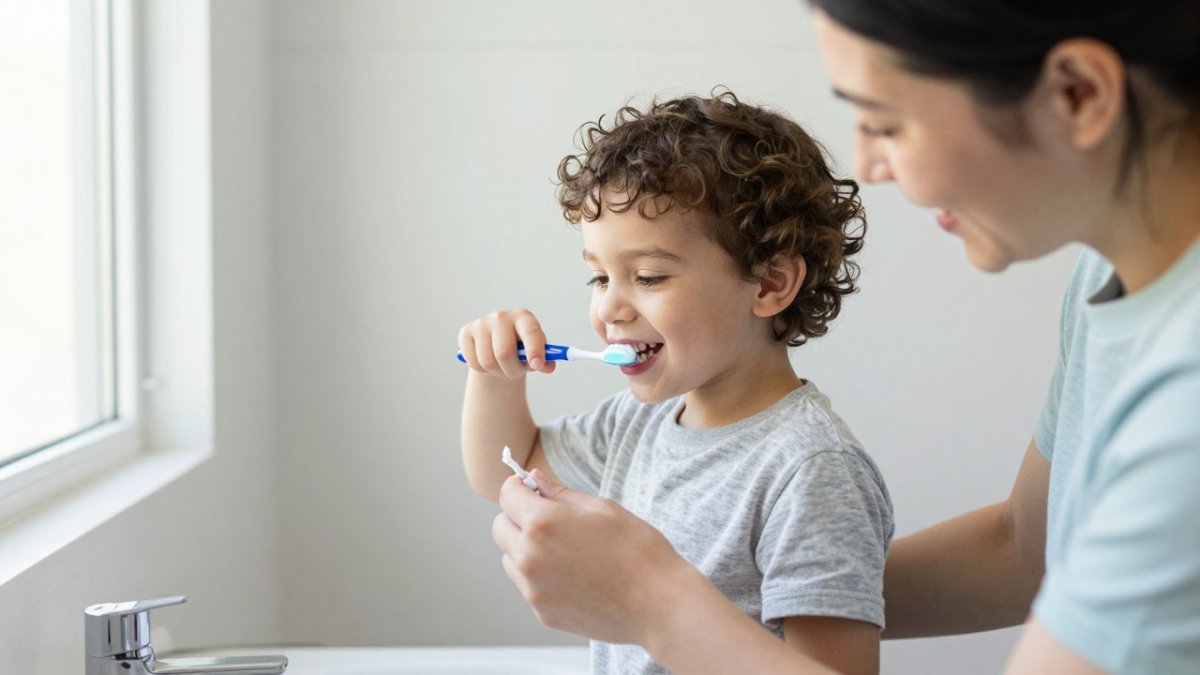
Fluoride Toothpaste Amounts by Age
Fluoride makes enamel stronger and helps repair early damage. The amount matters more than the brand, and the age-based amounts are specific:
- Under age 3: a rice-grain smear of fluoride toothpaste, twice a day
- Ages 3 to 6: a pea-sized amount, twice a day
- Always: supervise brushing and have your child spit rather than swallow
The American Academy of Pediatric Dentistry on fluoride supports these amounts for young children. If your water supply is not fluoridated, ask your dentist or pediatrician whether a fluoride supplement makes sense for your child.
Brushing Mechanics for a Resistant Toddler
A toddler rarely stands still for two full minutes. A soft-bristled child's toothbrush, a small circular motion along the gumline, and attention to the back teeth and the grooves on the chewing surfaces are commonly recommended. Brushing at the same time each day, and letting the child hold a second brush, reduces the struggle. For step-by-step help, see our guide on how to brush a toddler's teeth.
Watch out: a child who swallows a pea-sized amount of fluoride toothpaste every day is getting more fluoride than intended, which is why the rice-grain amount for children under 3 and supervision at every age matter.
Cavities in Baby Teeth Treatment: What to Expect
Cavities in baby teeth treatment depends on how deep the decay goes. Early white spots may only need fluoride and better home care. A small cavity usually gets a filling.
Some parents ask why we treat a tooth that will fall out anyway. Untreated decay spreads. It can cause serious infection, pain, and tooth loss years too early. Baby teeth hold space for adult teeth and support eating and speech development.
For anxious kids, our guide on pediatric dental care for anxious children walks through what helps. If cost is on your mind, read whether dental insurance covers kids' cleanings.
Cavity Risk Factors Beyond Sugar
Sugar is not the only factor. Several things shape a child's risk:
- Bacterial transmission: cavity-causing bacteria can pass from caregiver to baby through shared spoons or cleaning a pacifier in your mouth.
- Saliva flow: some children make less saliva, which means less natural repair.
- Enamel strength: genetics play a role in how strong a child's enamel is.
- Feeding pattern and age: risk shifts as a child moves from bottles to cups and table food.
- Oral hygiene habits: brushing and flossing consistency matters at every age.
A balanced view helps here. A child with strong enamel and good habits can still get decay from constant sipping. A child with weaker enamel can stay cavity-free with careful routines.
Book Your Child's First Dental Visit
The first visit sets the tone for years of care.
At Franklin Dental Center, Dr. Donna Franklin-Pitts and our team focus on gentle, patient-centered care for kids and adults. We accept Medicaid and CHIP for children, and we work to make visits efficient for families.
Not sure when to start? Our guide on what age a child should start seeing a dentist answers that directly. Ready to schedule? Here are 5 steps to schedule your child's pediatric dental exam.
Cavities in baby teeth are common, but they are not inevitable. The bacteria-sugar-acid cycle explains most of it, and daily habits interrupt that cycle.
Frequently Asked Questions
Is it normal for babies to get cavities?
Cavities in baby teeth are common but not inevitable. They happen when oral bacteria feed on sugars and starches and produce acid that wears down enamel. Babies are especially vulnerable because their enamel is thinner and softer than adult enamel. Frequent bottle feeding, sugary drinks, and missed brushing raise the risk. If you spot white spots or dark marks on your child's teeth, schedule a dental examination rather than waiting, since early childhood caries can progress quickly.
Can you reverse cavities on baby teeth?
Early demineralization, which shows up as chalky white spots, can sometimes be stopped or repaired with fluoride and better brushing before a true cavity forms. Once a hole exists in the enamel, it will not heal on its own and needs treatment. A pediatric dentist can assess whether a lesion is still reversible or requires a filling. Do not rely on home remedies for an established cavity, because untreated decay can spread to the pulp and cause a toothache or infection.
Is it worth fixing cavities in baby teeth if they will fall out anyway?
Yes. Primary teeth hold space for adult teeth, support eating and speech development, and help your child feel comfortable smiling. Untreated decay can lead to pain, infection, tooth loss, and damage to the developing permanent tooth underneath. Cavities in baby teeth treatment is usually straightforward, from fluoride varnish for early spots to fillings or crowns for larger decay. Skipping treatment often costs more later and can make a child anxious about dental visits.
Can a baby get cavities from a bottle or sippy cup?
Yes. Bottle tooth decay happens when a child drinks sugary liquids, including juice, formula, or breast milk, and the liquid pools around the teeth for long periods. Falling asleep with a bottle is the biggest risk, because saliva flow drops during sleep. Sippy cups used all day for juice or sweetened drinks cause similar prolonged exposure. Offer water between meals, finish bottles before bedtime, and clean your child's teeth after the last feeding of the day.