 Comparison
Dental Bridge vs Dental Implant for a Single Missing Tooth
Last Updated: November 14, 2026
Quick Summary
The dental bridge vs implant choice for a single missing tooth comes down to a trade-off: a bridge is faster and cheaper upfront, while an implant costs more and takes several months but preserves the jawbone and leaves adjacent teeth untouched. The right option depends on your bone density, the health of your adjacent teeth, and how you weigh upfront savings against long-term prognosis.
- A traditional bridge typically costs $2,000-$5,000, while a single tooth implant runs $3,000-$6,000.
- Bridges generally last roughly 10-15 years, while implants often last 20+ years.
- A bridge requires enamel reduction on the two healthy teeth flanking the gap; an implant leaves them untouched.
- Implant placement is surgical and the full timeline stretches across several months while osseointegration occurs.
- Ask your insurer about missing tooth clauses, coverage percentages, pre-authorization, and waiting periods before deciding.
Table of Contents
- Dental Bridge vs Dental Implant: A Quick Comparison
- Tooth Bridge vs Implant Cost: What to Expect
- The Single Tooth Implant Procedure, Step by Step
- Dental Bridge Lifespan and Long-Term Durability
- Impact on Adjacent Teeth and Jawbone Health
- Contraindications, Maintenance, and the Emotional Side of Tooth Loss
- Which Option Fits Your Smile? Deciding with a Consultation
- Frequently Asked Questions
Dental Bridge vs Dental Implant: A Quick Comparison
The dental bridge vs implant decision for a single missing tooth comes down to one trade-off: a bridge is faster and cheaper upfront, while an implant costs more and takes months but preserves the bone and the teeth on either side.
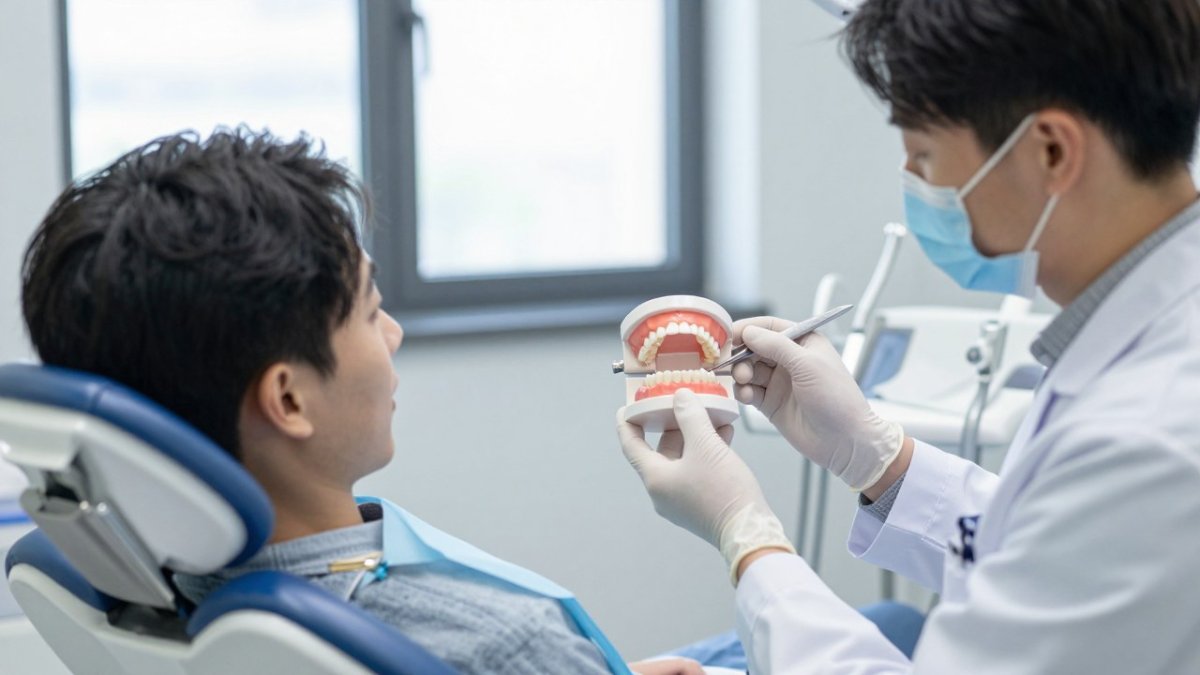
**A dental bridge is a fixed restoration that replaces a missing tooth by anchoring a crown to the teeth on either side of the gap.
Comparison Table: Bridge vs Implant at a Glance
| Factor | Traditional Bridge | Single Tooth Implant |
|---|---|---|
| Upfront cost | $2,000-$5,000 | $3,000-$6,000 |
| Treatment time | Weeks | Several months |
| Surgery required | No | Yes |
| Adjacent teeth | Reduced for crowns | Left untouched |
| Bone preservation | No | Yes, via osseointegration |
| Typical lifespan | Roughly 10-15 years | Often 20+ years |
Tooth Bridge vs Implant Cost: What to Expect
When patients ask about tooth bridge vs implant cost, the honest answer is that the gap is smaller than the sticker prices suggest, and the sticker prices themselves vary more than most guides admit. Pricing for either option depends on the materials, the number of visits, and what each quote includes, so the best next step is to request an estimate. Quotes for each option can bundle different components, so always ask for an itemized estimate before you compare two numbers side by side.
Lifespan varies with oral hygiene and individual factors. Some bridges and implants last many years with good care, but neither is permanent. Comparing total lifetime cost, including any future replacement, can give a clearer picture than the first invoice.
How Dental Insurance Typically Categorizes Each Option
This is the part most comparison guides skip, and it is often the deciding factor. Dental plans generally sort procedures into three tiers: preventive, basic or minor restorative, and major restorative. Cleanings and exams sit in the preventive tier and are usually covered at the highest percentage. Fillings and simple extractions sit in the basic tier.
A traditional bridge is usually classified as major restorative, so a plan might cover a portion of it after any deductible, up to the annual maximum. Implant coverage is far less consistent. Some plans treat the implant placement as a major restorative procedure and cover it at the same rate as a bridge; others exclude implants entirely or classify them as elective.
Financing and Payment Mechanics
Beyond insurance, most practices offer financing that spreads the out-of-pocket portion over months. Common options include third-party patient financing with promotional no-interest periods when the balance is paid within the promotional window, and in-house payment plans. If you use a health savings account or a flexible spending account, note that eligible dental expenses can often be paid with those funds, which effectively lowers your after-tax cost.
We accept a variety of insurance plans, including Medicaid and CHIP for kids, and offer flexible payment options. Anyone weighing cost against care can explore affordable cosmetic and restorative options in Tyler before booking. Watch out: a quote that looks cheaper upfront can cost more over time if it excludes the final crown, the abutment, or follow-up visits, so insist on an itemized written estimate for both options before you commit.
The Single Tooth Implant Procedure, Step by Step
A single tooth implant procedure unfolds in stages, not one appointment. First comes imaging and planning to confirm bone density and map the dental arch. Next, the titanium post is placed surgically under local anesthesia, and the site heals for several months while osseointegration fuses the post to the bone. An abutment is then attached, and a custom crown is fitted on top.
Expect the full timeline to stretch across several months, with the surgical portion itself typically completed in a single visit. If you are preparing for crown or implant work, it helps to know how to prepare for dental crown treatment ahead of time.
Dental Bridge Lifespan and Long-Term Durability
Dental bridge lifespan generally falls in the 10-15 year range with good oral hygiene, though some bridges serve longer. The weak point is rarely the bridge itself. It is the health of the supporting teeth and the gum tissue beneath the pontic, the false tooth that fills the gap.
In the dental bridge vs implant durability comparison, implants tend to win because they replace the tooth root, not just the crown. That root keeps the jawbone stimulated and reduces bone resorption at the missing site. Neither option is permanent. Both need maintenance, and both reward careful daily care with a longer service life. A realistic long-term prognosis depends more on your hygiene and regular checkups than on which restoration you chose.
Impact on Adjacent Teeth and Jawbone Health
Here is the difference most comparison guides underplay: a traditional bridge requires enamel reduction on the two healthy teeth flanking the gap so they can serve as abutments. Those adjacent teeth become load-bearing pillars whether they needed work or not. An implant leaves neighboring teeth untouched, which is why we call it the more conservative treatment.
The jawbone tells a similar story. Without a root to stimulate it, the bone at a missing tooth site gradually resorbs. An implant's titanium post mimics a natural root and supports bone density through osseointegration. For patients with adequate bone, that preservation is a genuine long-term health advantage. For patients with low bone density, a bone graft may be needed first, which adds time and cost.
Contraindications, Maintenance, and the Emotional Side of Tooth Loss
Tooth loss carries an emotional weight that clinical comparisons rarely mention. Replacing the tooth restores function, but it also restores confidence, and that matters as much as the bite force. The sensory experience of chewing can differ between a bridge and an implant, and that is worth discussing with your dentist before treatment.
Who Is Not a Good Candidate for Implants
Implant candidacy depends on more than willingness, and this is where a candid conversation matters most. The most common reasons a patient is steered toward a bridge instead include:
- Insufficient bone density or bone volume. The implant needs enough bone to anchor the post. When bone has resorbed at the missing site, a bone graft or sinus lift may be required first, which adds time and cost. Some patients choose a bridge rather than pursue grafting.
- Uncontrolled diabetes. Poorly controlled blood sugar impairs healing and raises the risk of implant failure. Patients whose diabetes is well managed are often still candidates, but the surgeon will want to see recent lab values.
- Heavy smoking. Smoking restricts blood flow to the surgical site and is associated with higher implant failure rates. Some practices ask patients to stop before surgery and during healing.
- Active periodontal disease. Gum disease around the planned site must be treated and stabilized before an implant is placed.
- Certain medications and medical conditions. Bisphosphonate therapy, some immunosuppressive drugs, and a history of head and neck radiation can affect healing and candidacy. This is a conversation for your physician and your dentist together.
- Inability to undergo surgery or commit to the timeline. Patients who cannot tolerate a surgical procedure, or who cannot wait several months for the final crown, may prefer a bridge.
A bridge can be the better path for someone with healthy adjacent teeth who wants to avoid surgery, but it has its own requirement: the two flanking teeth must be sound enough to serve as abutments. If you are unsure whether treatment is warranted, review the signs you need a restorative dental procedure and bring your questions to a consultation.
Daily Care Routines for Bridges and Implants
Both restorations depend on oral hygiene, but the routines differ in ways that affect how long each lasts:
- Brush twice daily with a soft-bristled brush; angle the bristles toward the gumline around an implant crown
- Floss daily; under a bridge, use a bridge threader or interdental brush to clean beneath the pontic
- Rinse with an antimicrobial mouthwash if we recommend one
- Keep scheduled cleanings to monitor gum tissue and the implant site
- Avoid chewing ice or hard objects that stress a crown
For an implant, the priority is the gum tissue around the abutment. Peri-implantitis, an infection of the tissue and bone around the implant, is the main long-term threat, and it often starts silently. For a bridge, the priority is the space under the pontic and the margins of the two abutment crowns, where food and bacteria collect. Watch out: skipping the cleaning under a bridge lets bacteria collect beneath the pontic, which is the most common reason a bridge fails early, and the same neglect around an implant can progress to bone loss before you feel anything.
Which Option Fits Your Smile? Deciding with a Consultation
No table settles this decision for you. Before you book, it helps to know how to choose a cosmetic dentist in Tyler so you pick a provider you trust. When you are ready to move forward, you can book restorative dentistry services in Tyler and get a plan built around your smile.
Your missing tooth will not wait, and neither should the decision. Franklin Dental Center offers patient-centered care focused on comfort, a gentle approach for anxious patients, and efficient multi-treatment appointments that save you repeat visits. Dr. Donna Franklin-Pitts and our team will help you weigh a bridge against an implant with clear, honest guidance. Get started with Franklin Dental Center and choose the restoration that fits your health and your budget.
Frequently Asked Questions
Is it better to get a bridge or an implant for a missing tooth?
There is no single best answer for everyone. Implants often last longer and protect jawbone density, but they require surgery and a higher upfront investment. Bridges are faster and non-surgical, but they rely on adjacent teeth and do not prevent bone loss. Your dentist will consider your bone health, adjacent tooth condition, budget, and timeline before recommending one.
What is the best option for replacing a single missing tooth?
A single tooth implant mimics a natural tooth root and does not require altering healthy neighboring teeth. However, a dental bridge vs implant decision depends on your medical history and preferences. If you have adequate bone density and want a long-term solution, an implant may be ideal. If you prefer a non-surgical route, a bridge can restore function and appearance.
Why would a dentist not recommend a bridge?
A dentist may steer you away from a bridge if the adjacent teeth are healthy and would need significant enamel reduction to serve as anchors. Bridges also do not stimulate the jawbone, which can lead to bone resorption over time. Additionally, if the supporting teeth have weak structures or periodontal issues, a bridge may not be stable. In such cases, an implant may offer a more conservative long-term prognosis.
How do the long-term costs of implants and bridges compare?
Costs for each option depend on the components included and the provider's quote, so request an itemized estimate. Lifetime cost also depends on how long each restoration lasts and whether it needs replacement. A cost-benefit analysis should include maintenance, replacement, and insurance coverage.
Can a bridge be used for one missing tooth?
Yes, a 3-unit bridge is a common solution for a single missing tooth. It uses the two adjacent teeth as abutments to support a pontic in the middle. This conservative treatment restores chewing and aesthetics quickly, but it requires enamel reduction on the neighboring teeth. Your dentist can assess whether your adjacent teeth are strong enough to support a bridge.