 Listicle
Affordable Cosmetic Dental Procedures in Tyler
Table of Contents
- What Are Affordable Cosmetic Dental Procedures?
- Teeth Whitening Options in Tyler
- Dental Bonding in Tyler: A Budget-Friendly Choice
- Porcelain Veneers and Other Smile Enhancements
- Understanding Cosmetic Dental Procedures Cost
- Dental Financing for Cosmetic Dentistry
- How to Choose the Right Cosmetic Dentist
- Frequently Asked Questions
Last Updated: October 14, 2026
What Are Affordable Cosmetic Dental Procedures?
Cosmetic dental procedures improve the appearance of your teeth and smile. At Franklin Dental Center, we help patients find options that deliver results without breaking their budget. Knowing the difference between cosmetic and restorative work helps you make smarter decisions.
Cosmetic vs. Restorative Dentistry
Cosmetic dentistry focuses on appearance: whitening discolored teeth, closing gaps, reshaping teeth, or replacing missing teeth with a natural look. Restorative dentistry repairs function: filling cavities, treating infections, or replacing teeth lost to decay or injury.
The distinction matters for your wallet. Insurance often covers restorative work because it restores function and prevents disease, while cosmetic procedures typically fall outside coverage.
Some procedures blur the line: bonding can be cosmetic (closing a gap) or restorative (filling a cavity), and veneers can restore function while improving appearance.
Teeth Whitening Options in Tyler
Professional teeth whitening is one of the most affordable cosmetic dental procedures available, with quick results and modest cost.
In-office whitening involves your dentist applying a professional-grade bleaching agent, sometimes with a light activator. Most patients see a noticeable difference.
Take-home kits use custom trays and professional-strength gel. Results build gradually.
Professional-grade agents are stronger and proper application protects gums and enamel.
Results last six months to two years depending on diet and habits, coffee, red wine, and tobacco stain faster.
Dental Bonding in Tyler: A Budget-Friendly Choice
Dental bonding is tooth-colored resin applied to your tooth, shaped, and hardened with a light. It's one of the most affordable cosmetic dental procedures in Tyler for small gaps, chips, or discoloration.
Bonding lasts 5-10 years with good care and can chip if you bite hard objects or clench. Repairs are simple, your dentist adds more material.
For patients seeking affordable cosmetic dental procedures, bonding solves multiple concerns in one appointment, closing gaps, repairing chips, or hiding minor stains, without the cost or time commitment of other options.
Porcelain Veneers and Other Smile Enhancements
Porcelain veneers are thin shells bonded to the front of your teeth. They cover discoloration, chips, gaps, and misalignment, delivering a dramatic transformation that lasts longer than bonding, though they cost more. Veneers require two appointments: first, your dentist removes a thin enamel layer and takes impressions for a lab to craft custom veneers; second, the veneers are bonded permanently to your teeth.
For patients exploring affordable cosmetic dental procedures in Tyler, the trade-offs matter: bonding is cheapest but least durable, composite veneers cost more but look better longer, and porcelain veneers are the premium option with superior longevity and appearance.
| Procedure | Typical Durability | Stain Resistance | Reversibility |
|---|---|---|---|
| Bonding | 5-10 years | Low | Reversible |
| Composite Veneers | 5-7 years | Moderate | Reversible |
| Porcelain Veneers | 10-15 years | High | Permanent |
| Professional Whitening | 6 months-2 years | N/A | Reversible |
Understanding Cosmetic Dental Procedures Cost
Prices vary, but knowing typical quoted ranges, what drives them up or down, and how to read an itemized estimate helps you compare practices fairly.
Typical Price Ranges for Common Cosmetic Procedures
These figures reflect common national ranges from consumer dental-cost resources and practice fee schedules. Local quotes vary with overhead, materials, and case complexity.
| Procedure | Typical Range (per tooth or per arch) | What Moves the Price |
|---|---|---|
| In-office professional whitening | $300-$650 per visit | Number of bleaching cycles, whether a light accelerator is used, take-home tray add-ons |
| Custom take-home whitening trays | $150-$400 | Tray fabrication, gel strength, number of refill syringes included |
| Dental bonding (single tooth) | $200-$600 | Number of surfaces, whether decay is present, shade-matching complexity |
| Composite veneers | $400-$1,200 per tooth | Chairside time, layering technique, number of teeth in the smile zone |
| Porcelain veneers | $900-$2,500 per tooth | Lab quality, ceramist skill, temporary veneers, digital smile design |
| Full porcelain crown (cosmetic indication) | $800-$2,000 | Metal-free vs. porcelain-fused-to-metal, lab, imaging |
| Clear aligner therapy (full case) | $3,000-$8,000 | Number of aligners, length of treatment, retainer inclusion |
What Actually Drives Your Quote
A quote is built from a handful of inputs. Knowing them lets you ask better questions.
- Number of teeth treated. Bonding one chipped incisor costs a fraction of veneering eight upper teeth. Confirm whether the quote is per tooth or per case.
- Materials. Composite resin is inexpensive; feldspathic or lithium disilicate porcelain is not. Ask which material is quoted and why.
- Imaging and diagnostics. Digital X-rays, intraoral scans, and digital smile design add upfront cost but reduce remakes. Some practices bundle these; others bill separately.
- Preparatory treatment. Gum contouring, enamel reduction, orthodontic alignment, or treating decay first can add thousands before cosmetic work begins.
- Lab fees. Porcelain veneers and crowns carry a lab fee that varies with the ceramist; a premium lab can add several hundred dollars per unit.
- Temporaries and follow-up visits. Some quotes include provisional restorations and adjustments; others don't.
How to Read an Itemized Estimate
Ask for a written, itemized treatment plan before you commit. A useful estimate lists each procedure by CDT code or description, the number of units, the fee per unit and total, which items are diagnostic, preparatory, or cosmetic, what insurance covers and your out-of-pocket balance, and whether the quote expires. If a practice won't put it in writing, get a second opinion.
Why Two Quotes for the Same Smile Can Differ by Thousands
Overhead is a variable. Experience matters too, a dentist who has placed many veneer cases may charge more per unit, and the difference can show up in fit, shade, and longevity.
Insurance and Cosmetic Work
Most dental plans exclude purely cosmetic procedures, except when a procedure also restores function, a crown after a fracture, or bonding that closes a gap causing gum irritation. Then the plan may pay a restorative benefit and you cover the cosmetic upgrade. Ask your dentist to document the functional justification in the claim; without it, the procedure is almost always denied.
Dental Financing for Cosmetic Dentistry
Financing is where affordability is actually answered. Here are the main paths, costs, eligibility, and traps.
Third-Party Dental Financing
Healthcare-specific credit cards and installment lenders are the most common route: you're approved for a limit, the practice is paid in full, and you repay the lender over time.
- Promotional periods. Many lenders offer 6-, 12-, 18-, or 24-month no-interest promotions if the balance is paid in full before the promo ends. Miss the deadline by a day and deferred interest can be applied retroactively to the original balance.
- Standard terms. Outside promotions, APRs commonly run in the mid-to-high 20% range. Check the current rate before signing.
- Approval and limits. Approval is credit-based, so apply before treatment is scheduled, not the day of.
- Where to apply. Most practices have a preferred lender for in-office pre-qualification, which usually doesn't affect your credit score; a full application may.
In-House Payment Plans
Many practices offer their own installment plans, though terms vary. Ask about interest or administrative fees, the number and schedule of installments, what happens if treatment is paused or added mid-plan, and whether paying in full upfront earns a discount. In-house plans can be a cost-effective option.
Dental Savings Plans
A dental savings plan is not insurance. You pay an annual membership fee and get a fixed discount at participating dentists. Cosmetic procedures are frequently included even when insurance excludes them. There's no waiting period or annual maximum, but you must use a participating provider, and the discount applies to the practice's standard fee.
Dental Schools and Residency Clinics
Dental schools and hospital-based residency programs deliver care at reduced fees because treatment is performed by supervised students or residents. Trade-offs: longer, more frequent appointments, scheduling around the academic calendar, and cosmetic cases limited to the curriculum.
Community Health Centers and Nonprofit Clinics
Federally qualified health centers and nonprofit dental clinics offer sliding-scale fees based on income. Availability varies, and cosmetic procedures are less common than restorative care, but it's worth calling, especially if you also need a cleaning, exam, or restorative work that could be bundled.
Tax-Advantaged Accounts
If your employer offers a flexible spending account (FSA) or you contribute to a health savings account (HSA), you can pay for qualifying dental expenses with pre-tax dollars. FSAs are use-it-or-lose-it within the plan year, though many allow a small carryover or grace period; HSAs require an eligible high-deductible health plan and roll over year to year. Purely cosmetic procedures may not qualify, but those with a restorative or functional component often do. Keep itemized receipts and check IRS Publication 502.
Saving Strategically
If nothing is urgent, the cheapest financing is no financing: estimate your total from an itemized plan, divide by the months until you want the work done, and set that aside. This works best for whitening, bonding, and single-tooth cases. For multi-tooth cases, ask whether the practice will stage treatment across two calendar years to reset an annual insurance maximum and spread the cost.
How to Choose the Right Cosmetic Dentist
Ask about your dentist's experience with your specific procedure.
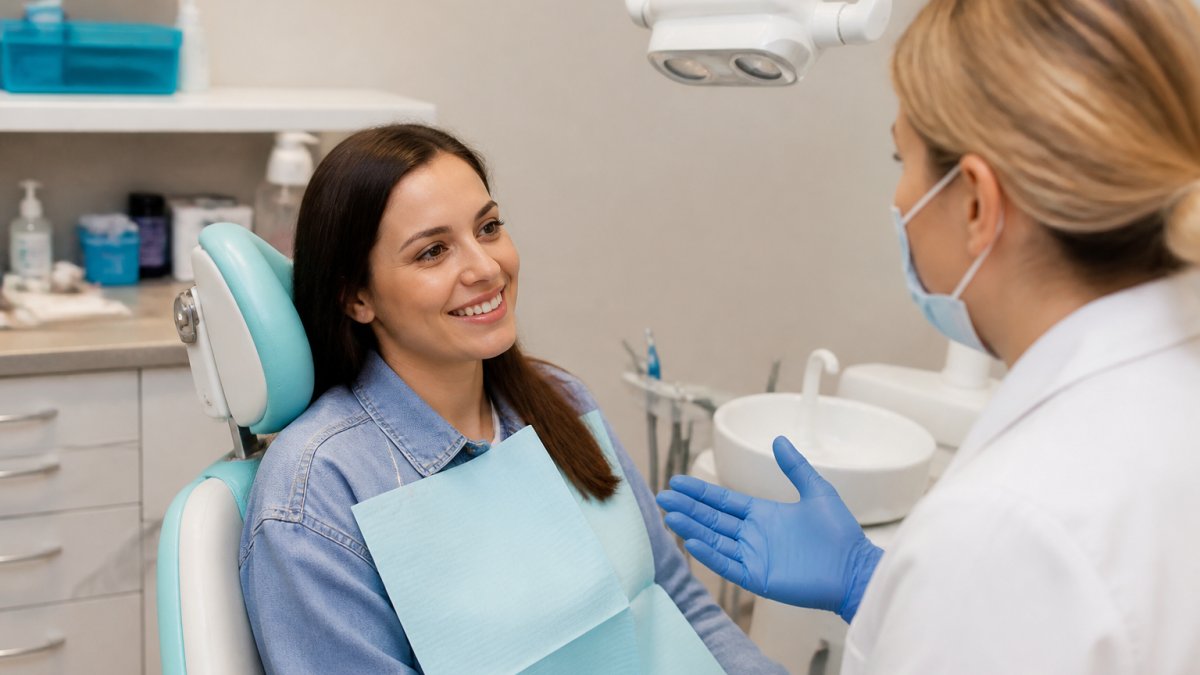
Verify credentials: your dentist should be licensed and in good standing with your state dental board.
Request a consultation before committing.
At Franklin Dental Center, we focus on understanding your goals and recommending procedures that deliver real improvement for your budget.
Ask about materials: porcelain veneers from a reputable lab can last longer, and professional-grade whitening agents can outperform budget options.
Read patient reviews carefully, looking for comments about cosmetic results rather than general friendliness.
Frequently Asked Questions
What are the most affordable cosmetic dental procedures?
Teeth whitening, dental bonding, and cosmetic fillings are typically among the most budget-friendly cosmetic options. Whitening brightens your smile without altering tooth structure, bonding repairs chips and gaps with tooth-colored resin, and cosmetic fillings replace visible metal fillings with natural-looking materials. For specific pricing on affordable cosmetic dental procedures in your area, contact your local dentist to discuss which option best fits your smile goals and budget.
Does dental insurance cover cosmetic dental procedures?
Most dental insurance plans do not cover purely cosmetic procedures like whitening or veneers because they focus on appearance rather than function. However, some cosmetic treatments may be partially covered if they also serve a restorative purpose, for example, bonding to repair a chipped tooth. Check your specific insurance plan and discuss coverage options with your dentist before proceeding with treatment.
How much does dental financing for cosmetic dentistry typically cost?
Dental financing options vary widely depending on the provider and your creditworthiness. Many dental offices offer in-house payment plans with little or no interest, while third-party financing companies may charge interest rates ranging from 0% promotional periods to higher rates depending on terms. Ask your dentist about flexible payment options, monthly installment plans, or promotional financing that can make cosmetic procedures more affordable.
What makes a procedure cosmetic versus restorative?
Restorative procedures repair damage and restore function, like filling a cavity or replacing a missing tooth. Cosmetic procedures improve appearance without addressing a functional problem, like whitening teeth or adding veneers. Some procedures blur the line; for example, bonding a chipped front tooth is both restorative and cosmetic. Your dentist can explain whether your desired treatment is purely cosmetic or offers functional benefits that insurance might partially cover.
How do I evaluate a cosmetic dentist's qualifications?
Look for a dentist who is licensed and has specific training or experience in cosmetic procedures. Ask about their education, years of experience with the specific procedure you want, and whether they offer a consultation to discuss your goals. Request before-and-after photos of their work, read patient reviews, and ensure they take time to understand your expectations and explain realistic outcomes and any risks involved.
Improving your smile shouldn't require choosing between quality and affordability. At Franklin Dental Center, we offer comprehensive cosmetic dental care with flexible payment options and genuine attention to your comfort. Whether you're interested in professional whitening, bonding, or veneers, our team helps you find the right procedure for your goals and budget. Request an appointment today and discover how we can help you achieve the smile you've always wanted.