 How-to
Are Dental X-Rays Part of a Checkup? What to Expect
Last Updated: November 23, 2026
Quick Summary
Yes, dental x-rays are a standard part of a routine dental checkup, though not every visit includes them. Your dentist sets the frequency based on your dental history, age, and risk factors, and reviews that decision at each checkup rather than following a fixed calendar.
- A visual exam shows tooth surfaces, while radiographs reveal roots, bone, and spaces between teeth.
- Bitewing images are the workhorse of a routine checkup for cavity checks.
- No special preparation is needed; you can eat, drink, and take medications as usual.
- You can refuse dental x-rays, but your dentist then works with less information.
- A lead apron with a thyroid collar protects your body and neck during imaging.
Table of Contents
- Are Dental X-Rays Part of a Checkup?
- Why Dentists Take Dental X-Rays
- What X-Rays Reveal That a Visual Exam Cannot
- Dental X-Ray Types: Bitewing, Periapical, and Panoramic
- What Happens During the X-Ray Procedure
- Are Dental X-Rays Necessary Every Year?
- Are Dental X-Rays Safe?
- Can I Refuse Dental X-Rays?
- Frequently Asked Questions
Are Dental X-Rays Part of a Checkup?
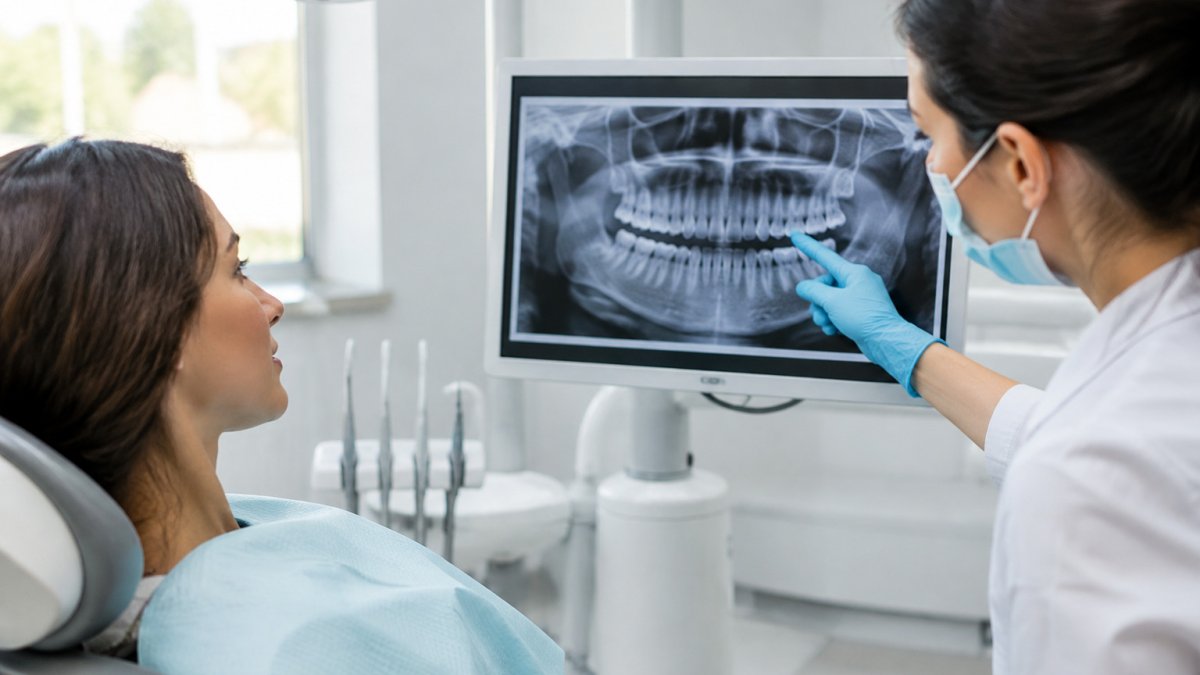
Yes. Dental X-rays are a standard part of a routine dental checkup, though not every visit includes them. Dental X-rays are a tool dentists use to see what the naked eye cannot. A visual exam shows the surface of your teeth and gums. Radiographs show the roots, the bone underneath, and the spaces between teeth.
That difference matters. Many serious problems start where no one can see them.
Below, we explain when imaging happens, what it finds, and what you can ask before agreeing to it. If you are ready to schedule, you can book a routine dental checkup in Tyler.
Why Dentists Take Dental X-Rays
Dentists take dental X-rays to find problems early, while they are still small and cheap to fix. A visual examination cannot see through enamel, bone, or gum tissue. Radiographs can.
Here is what that early look buys you:
- Smaller fillings. A cavity caught between teeth stays small. One caught after it hurts is often a root canal.
- Less guesswork. Images show the exact depth of decay and the shape of a tooth root.
- A baseline. Regular images let your dentist compare this year to last year.
A common mistake is skipping imaging because nothing hurts. Pain is usually a late signal, not an early one.
What X-Rays Reveal That a Visual Exam Cannot
Dental radiographs reveal problems hidden beneath the surface of your teeth and gums. Your dentist can see the spaces between teeth, the bone that holds teeth in place, and the area around tooth roots.
Specifically, images can show:
- Interproximal decay: cavities between teeth, where a visual exam cannot reach
- Bone loss: early signs of gum disease before the gums pull away
- Impacted teeth: wisdom teeth trapped under the gum line
- Infection: pockets of decay or infection near a root
- Root and jaw problems: cracks, cysts, and changes in the jawbone
- Sinus issues: the sinuses sit close to upper tooth roots
A visual examination catches what is visible. Imaging catches what is not. You need both to get a full picture of your oral health. For a closer look at whether the whole visit is worthwhile, see are family dental checkups worth it.
Dental X-Ray Types: Bitewing, Periapical, and Panoramic
Dental X-ray types differ by what they show and how much of your mouth they cover. Your dentist picks the type based on what they need to see.
| Type | What It Shows | Common Use |
|---|---|---|
| Bitewing | Crowns of back teeth and spaces between them | Routine cavity checks |
| Periapical | One or two full teeth, root to tip | Root infections, single-tooth pain |
| Panoramic | Entire mouth, jaw, and sinuses in one image | Wisdom teeth, treatment planning |
| Full-mouth series | Every tooth, root, and surrounding bone | New patients, gum disease workup |
Bitewing images are the workhorse of a routine checkup. Panoramic images are common for new patients, teens, and anyone facing surgery or orthodontic treatment. A full-mouth series gives a complete map of the mouth and is usually repeated only every few years.
What Happens During the X-Ray Procedure
The X-ray procedure is typically brief, but knowing what to expect before, during, and after the appointment can make the visit feel more predictable. Here is a practical walkthrough.
Before the appointment. No special preparation is needed. You can eat, drink, and take medications as usual. Two things help: bring a list of any recent imaging from another dentist, and tell the office in advance if you are pregnant, think you might be, or have a strong gag reflex. Sharing prior images may help your dentist decide whether new ones are needed, subject to their assessment of image quality and how recent the images are.
During the appointment. The sequence usually looks like this:
- You put on a lead apron with a thyroid collar.
- The hygienist positions a small sensor or film inside your mouth.
- You bite down gently and hold still for a second or two.
- The sensor is moved to the next position and the process repeats.
- Your dentist reviews the images with you before you leave the chair.
What you feel depends on the image type. Bitewing images use a small sensor that rests between your teeth and may feel like a stiff piece of plastic. Periapical images use a slightly larger sensor that can press against the roof of your mouth or the floor of your mouth; the pressure is brief.
Digital sensors are generally faster and more comfortable than older film. If you have a strong gag reflex, tell your hygienist before they start. They can adjust the sensor size and angle, and some offices offer a smaller sensor for patients who gag easily.
After the appointment. Your dentist typically reviews the images with you and explains what follow-up, if any, is needed. Images generally become part of your dental record, and patients can usually ask for a copy. If a problem is found, the dentist will describe the finding and discuss next steps, which may range from monitoring to scheduling treatment.
If you change dentists, it can help to ask whether your previous images can be shared before agreeing to a new full set. Recent, clear images may make repeat imaging unnecessary, but the final decision belongs to the dentist based on what they need to see.
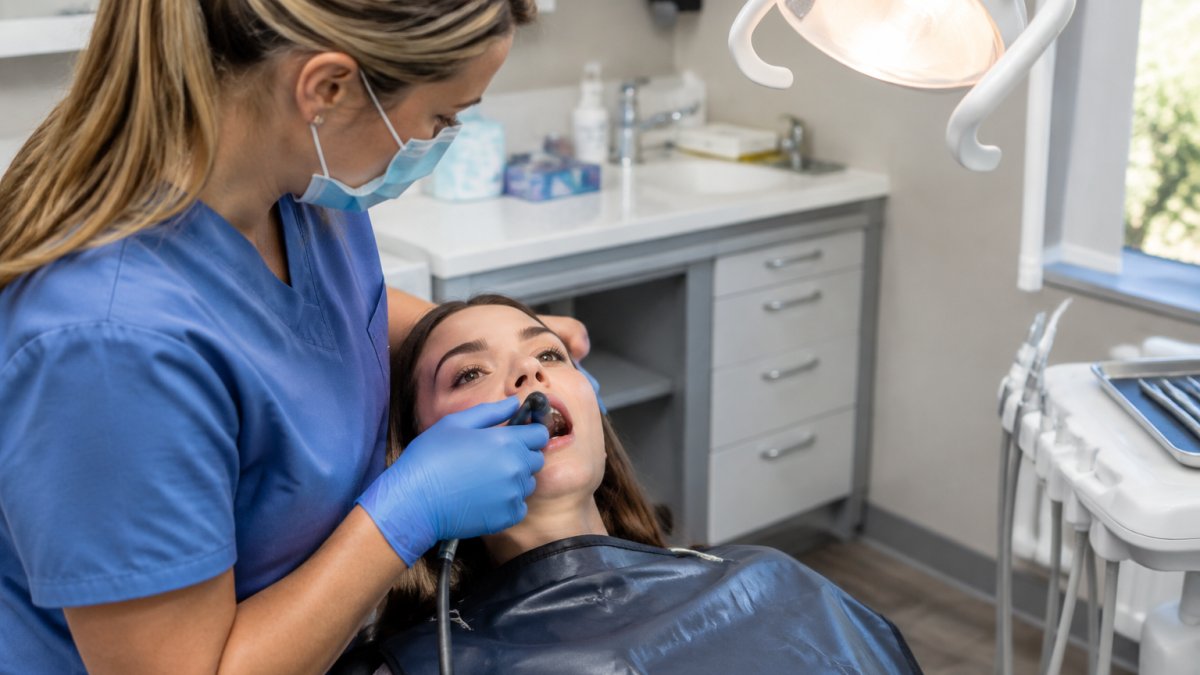
If you want to know how long the whole visit takes, our guide on how long a teeth cleaning takes walks through the full appointment.
Are Dental X-Rays Necessary Every Year?
No, dental X-rays are not necessary every year for every patient. There is no single schedule that fits everyone. Your dentist sets the frequency based on your dental history, your age, and your risk factors, and the decision should be reviewed at each checkup, not locked into a calendar.
Factors that change the schedule include:
- Age: children and teens often need images more often as their mouths change, while adults with stable oral health may go longer between sets.
- Cavity history: a patient with several past cavities is watched more closely than one with none.
- Gum disease: bone loss needs tracking over time, so patients with periodontal disease may need images more frequently.
- New patient status: a full set gives a starting baseline so future images have something to compare against.
- Pregnancy or medical changes: your dentist may delay or adjust imaging; tell the office before any images are taken.
- Previous images: recent, clear images from another dentist may make new ones unnecessary, subject to your dentist's assessment of quality and how much time has passed.
Dental guidance generally stresses that the decision about imaging frequency belongs to the dentist and patient together, based on need, rather than an automatic schedule.
A common pattern is that a healthy adult with no cavities and no gum disease may go longer between bitewing sets than a patient with active decay or a history of gum treatment. Children in the years when their teeth are changing often need images more often because their mouths are actively developing. The point is not to memorize a number, it is to understand why your dentist is recommending imaging today and what would change that recommendation.
Watch out: if you switch dentists and are asked for a full set of images on the first visit, ask whether your previous images can be transferred first. Recent, clear images may be usable, and avoiding unnecessary repeat imaging is a reasonable question to raise.
Are Dental X-Rays Safe?
Dental X-rays are generally considered safe when used based on clinical need, and digital imaging uses lower radiation doses than older film.
Safety comes from three things:
- Low dose. Digital sensors need far less radiation than old film did.
- Shielding. A lead apron and thyroid collar protect your body and neck.
- Justification. Images are taken only when there is a real question to answer.
Radiation safety guidance from the American Dental Association and the U.S. Food and Drug Administration both support the principle that imaging should be based on clinical need, not a fixed calendar. If you are pregnant or think you might be, tell your dentist before any imaging. They can explain the risks and adjust the plan. If cost is a concern, our breakdown of dental checkup costs without insurance explains what to expect.
Can I Refuse Dental X-Rays?
Yes, you can refuse dental X-rays. Imaging is a recommendation, not a requirement, and you have the right to say no or to ask questions first.
Refusing is not unreasonable. Some patients decline because of cost, anxiety, or pregnancy. The trade-off is real: without images, your dentist works with less information and may miss problems that are not yet visible.
Before you decide, ask these questions:
- Which images do you need today, and why now?
- What will you be looking for in them?
- Can we use images from my last dentist?
- What happens if we skip them this visit?
- How much will this add to my bill?
A good dentist answers all five without pressure. If dental anxiety is the reason you are hesitant, our guide on finding a dentist for dental anxiety covers how to find a practice that works at your pace.
A checkup works best when you understand what happens and why. If you are due for a visit, or you have been putting one off because of nerves or cost, we can help. Franklin Dental Center provides comprehensive, personalized care for patients of all ages in the Tyler, Texas area, and Dr. Donna Franklin-Pitts and our team focus on explaining each step, including whether imaging is needed today. Get started with Franklin Dental Center and book a checkup that fits your schedule and your comfort level.
Frequently Asked Questions
Can a dentist tell if a tooth is infected from an X-ray?
Often yes. Dental X-rays can show changes in bone density around a tooth root, which may indicate an infection or abscess that is not visible to the eye. A periapical X-ray focuses on the full tooth from crown to root tip, making it useful for spotting problems below the gumline. An X-ray alone does not confirm every diagnosis, though. Your dentist combines the image with a clinical exam, your symptoms, and your dental history before recommending treatment.
Are X-rays included in a dental exam?
They can be, but they are not automatically part of every visit. A routine dental checkup usually includes a visual examination of your teeth and gums, and your dentist decides whether dental images are needed based on your age, oral health status, risk factors, and how long it has been since your last set. If you are a new patient, your dentist may want a full-mouth series or panoramic X-ray to establish a baseline. Ask the front desk whether imaging is included in the appointment or billed separately.
How many times a year can you get dental X-rays?
There is no single number that fits everyone. Dental guidance generally holds that X-ray frequency should be based on professional judgment of each patient's needs rather than a fixed schedule. Someone with active tooth decay or gum disease may need images more often, while a low-risk adult with no new symptoms may go longer between sets. Children and teens are often imaged on a different schedule because their teeth and jawbones are still developing. Your dentist should explain the reasoning behind any recommended imaging.
Do dentists have to give you a copy of your X-rays?
In most cases, yes. Dental practices generally must provide patients with copies of their dental records, including radiographs, upon request, though the exact rules and any allowable fees vary by state. If you are switching practices or moving, ask for your most recent images so the new dentist does not have to repeat them. Having previous images on hand also helps your new dentist compare changes over time, which can reduce the number of new X-rays needed at your first visit.